Cybersecurity Mandates: 1.5 Million US Businesses by Q3 2026
Latest developments on Urgent Alert: New Federal Cybersecurity Mandates Impacting 1.5 Million US Businesses by Q3 2026, with key facts, verified sources and what readers need to monitor next in Estados Unidos, presented clearly in Inglês (Estados Unidos) (en-US).
An Urgent Alert: New Federal Cybersecurity Mandates Impacting 1.5 Million US Businesses by Q3 2026 is shaping today’s agenda with new details released by officials and industry sources. This update prioritizes what changed, why it matters and what to watch next, in a straightforward news format.
Understanding the Scope of New Federal Cybersecurity Mandates
The federal government has issued an urgent alert regarding new cybersecurity mandates, slated to affect approximately 1.5 million US businesses by the third quarter of 2026. This significant regulatory shift aims to bolster national digital defenses against an escalating threat landscape.
These mandates are not merely a recommendation but a compulsory framework designed to enhance the resilience of critical infrastructure and supply chains. Businesses across various sectors must now prepare for substantial changes in their operational security protocols.
The impending deadlines require immediate attention from business leaders and IT professionals to avoid potential non-compliance penalties and operational disruptions. Understanding the full scope of these new Federal Cybersecurity Mandates is the first crucial step.
Key Provisions and Compliance Requirements for US Businesses
The new Federal Cybersecurity Mandates introduce several critical provisions that businesses must address comprehensively. These include stringent requirements for incident reporting, risk management frameworks, and data protection protocols.
Compliance will necessitate a thorough assessment of existing cybersecurity postures, identifying vulnerabilities, and implementing robust solutions to meet federal standards. Businesses are urged to engage with cybersecurity experts to navigate these complex requirements effectively.
Failure to comply with these mandates could result in significant financial penalties, reputational damage, and operational sanctions. The government emphasizes proactive engagement to ensure a smooth transition for all affected entities.
Mandated Incident Reporting and Response Plans
A cornerstone of the new Federal Cybersecurity Mandates is the requirement for timely and accurate incident reporting. Businesses must establish clear protocols for detecting, responding to, and reporting cybersecurity incidents to relevant federal agencies.
This includes developing comprehensive incident response plans that outline roles, responsibilities, and communication strategies during a cyberattack. The goal is to minimize damage and facilitate coordinated national responses.
- Establish clear incident detection and reporting timelines.
- Develop detailed incident response playbooks.
- Train staff on reporting procedures and escalation paths.
Enhanced Risk Management Frameworks
Businesses will be required to implement enhanced risk management frameworks that align with federal guidelines. This involves continuous monitoring, vulnerability assessments, and the adoption of risk-based security controls.
These frameworks are designed to help organizations proactively identify, assess, and mitigate cybersecurity risks before they can be exploited. It moves beyond reactive measures to a more preventative approach.
- Conduct regular cybersecurity risk assessments.
- Implement continuous monitoring of systems and networks.
- Adopt industry-recognized security control frameworks.
Timeline and Implementation Phases for Federal Cybersecurity Mandates
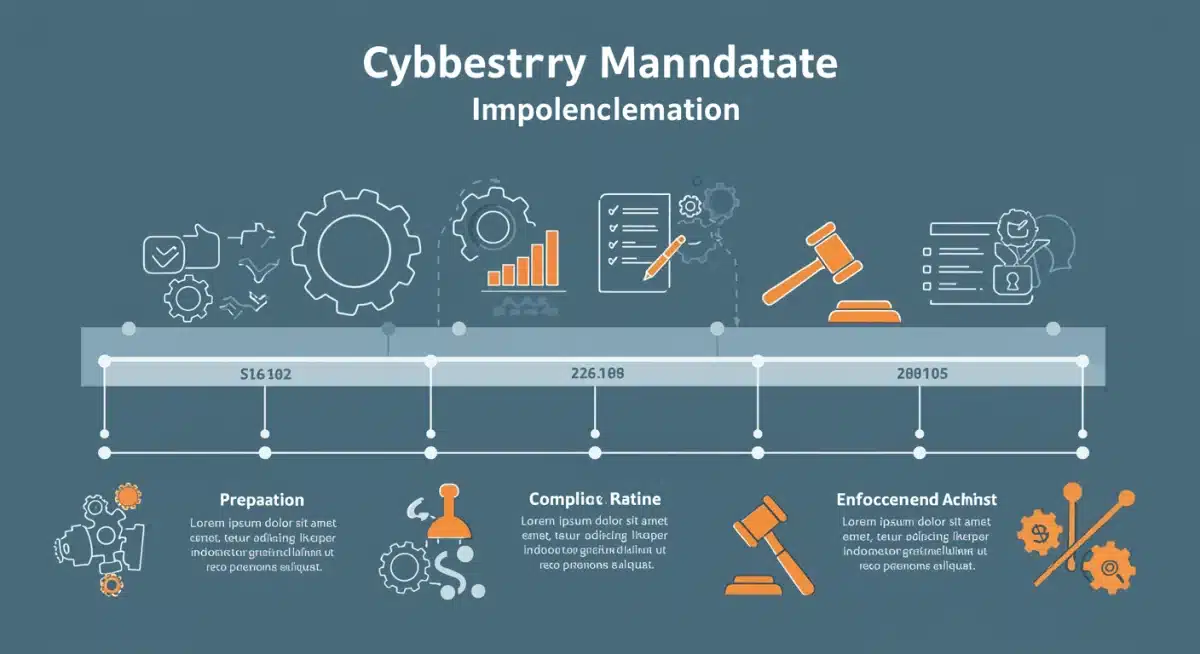
The implementation of the Federal Cybersecurity Mandates is structured in phases, with Q3 2026 marking a critical deadline for widespread compliance. Businesses need to understand this timeline to strategically plan their cybersecurity upgrades.
Early phases involve guidance dissemination and educational initiatives, followed by enforcement and audit readiness periods. Proactive engagement during these initial stages can significantly ease the burden of later compliance.
The government intends to provide resources and support to help businesses, particularly small and medium-sized enterprises (SMEs), adapt to these new requirements. However, ultimate responsibility for compliance rests with individual organizations.
Crucial Deadlines and Milestones
The federal government has outlined specific deadlines for various aspects of the new mandates, with some provisions taking effect sooner than others. Businesses must pay close attention to these dates to ensure timely adherence.
These milestones include dates for submitting initial compliance plans, completing specific security assessments, and fully implementing new technological safeguards. Staying informed is paramount.
- Q1 2025: Initial guidance and resource availability.
- Q4 2025: Mandatory self-assessment submission period opens.
- Q3 2026: Full compliance expected for all covered entities.
Phased Rollout Strategy and Support
The phased rollout strategy for the Federal Cybersecurity Mandates aims to provide businesses with ample time to adjust and implement necessary changes. This approach acknowledges the diverse capabilities and resources of the affected entities.
Federal agencies are collaborating with industry associations and cybersecurity organizations to offer support, training, and best practice guides. These resources are vital for businesses seeking to achieve compliance efficiently.
Businesses are encouraged to leverage these support mechanisms and actively participate in informational webinars and workshops. This will help them understand the nuances of the mandates and tailor their compliance efforts accordingly.
Impact on 1.5 Million US Businesses: What to Expect
The Federal Cybersecurity Mandates will profoundly impact 1.5 million US businesses, ranging from small local enterprises to large corporations. The primary goal is to create a more secure digital ecosystem for the nation.
Businesses can expect increased operational costs associated with cybersecurity investments, including technology upgrades, staff training, and expert consultations. However, these costs are offset by the reduced risk of costly cyberattacks.
Beyond financial implications, these mandates will foster a culture of heightened cybersecurity awareness and best practices across the US business landscape. This collective improvement is crucial for national security.
Challenges and Opportunities for Compliance
While the new Federal Cybersecurity Mandates present significant compliance challenges, they also create unique opportunities for businesses. Proactive organizations can leverage these requirements to gain a competitive edge.
Challenges include resource allocation, talent acquisition, and integrating new security measures into existing systems. However, compliance can lead to enhanced customer trust, improved operational efficiency, and access to new federal contracts.
Businesses that embrace these mandates not only protect themselves but also contribute to a stronger national cybersecurity posture. This forward-thinking approach transforms a regulatory burden into a strategic advantage.
Addressing Resource Constraints for Small Businesses
Small and medium-sized businesses (SMBs) often face significant resource constraints when implementing complex cybersecurity measures. The federal government acknowledges this and is working to provide tailored support for these entities in adhering to the Federal Cybersecurity Mandates.
This support may include grants, subsidized training programs, and simplified compliance frameworks designed specifically for businesses with limited IT budgets and personnel. Collaboration with local economic development agencies is also being explored.
SMBs are encouraged to explore managed security service providers (MSSPs) and cloud-based security solutions that can offer cost-effective ways to meet the new federal requirements. External expertise can bridge internal skill gaps.
Leveraging Compliance for Competitive Advantage
Beyond simply avoiding penalties, achieving compliance with the Federal Cybersecurity Mandates offers a distinct competitive advantage. Businesses that can demonstrate robust cybersecurity practices will be more attractive to partners and customers.
Strong cybersecurity postures build trust, protect sensitive data, and minimize business interruptions, all of which enhance an organization’s reputation and market standing. This can be a key differentiator in a competitive marketplace.
Furthermore, many federal contracts and supply chain partnerships will increasingly require demonstrable compliance with these new standards. Early adopters will be well-positioned to capitalize on these opportunities.
The Role of Technology and Innovation in Meeting Mandates
Meeting the new Federal Cybersecurity Mandates will heavily rely on the adoption of advanced cybersecurity technologies and innovative solutions. Businesses must invest in tools that can automate monitoring, detect threats, and streamline incident response.
Artificial intelligence (AI), machine learning (ML), and cloud-native security solutions are becoming indispensable for maintaining a strong defensive posture. These technologies offer scalability and efficiency that traditional methods cannot match.
The mandates also encourage the development and deployment of new security paradigms, such as Zero Trust architectures, which fundamentally change how access and data protection are managed across networks. Embracing these innovations is key.
Preparing Your Business: Immediate Steps and Long-Term Strategies
For the 1.5 million US businesses affected by the Federal Cybersecurity Mandates, preparation is paramount. Immediate steps involve conducting a comprehensive cybersecurity audit and gap analysis to understand current deficiencies.
Long-term strategies should focus on continuous improvement, regular employee training, and fostering a security-first culture within the organization. Cybersecurity is an ongoing process, not a one-time fix.
Engaging with legal counsel and cybersecurity consultants familiar with federal regulations can provide invaluable guidance. This ensures that all efforts are aligned with the specific requirements of the mandates.
Conducting a Cybersecurity Audit and Gap Analysis
The first critical step for any business is to perform a thorough cybersecurity audit. This assessment will evaluate current security controls, policies, and procedures against the upcoming Federal Cybersecurity Mandates.
A gap analysis will then identify areas where the business falls short of the new federal requirements, providing a clear roadmap for remediation. This diagnostic process is essential for effective planning.
- Assess current security infrastructure and software.
- Review existing cybersecurity policies and employee training.
- Identify discrepancies between current practices and federal mandates.
Developing a Comprehensive Compliance Roadmap
Based on the audit and gap analysis, businesses must develop a detailed compliance roadmap. This plan should outline specific actions, timelines, assigned responsibilities, and necessary budget allocations to meet the Federal Cybersecurity Mandates.
The roadmap should be dynamic, allowing for adjustments as further guidance from federal agencies becomes available. Regular reviews and updates are crucial to staying on track.
- Prioritize remediation efforts based on risk and mandate deadlines.
- Allocate sufficient budget for technology, training, and personnel.
- Establish a cross-functional team to oversee compliance initiatives.
Federal Government’s Stance and Future Outlook
The federal government’s stance on cybersecurity is clear: a robust and secure digital infrastructure is non-negotiable for national security and economic stability. These Federal Cybersecurity Mandates reflect a growing commitment to protecting US businesses from evolving threats.
Future outlook suggests that these mandates are just the beginning, with continuous updates and expansions likely as cyber threats become more sophisticated. Businesses must view compliance as an ongoing strategic imperative.
The government aims to create a collaborative environment where information sharing and best practices are encouraged. This collective defense strategy is vital in the face of global cyber adversaries.
| Key Point | Brief Description |
|---|---|
| Mandate Scope | Affects 1.5 million US businesses by Q3 2026. |
| Compliance Focus | Incident reporting, risk management, data protection. |
| Preparation Steps | Audit, gap analysis, compliance roadmap, tech investment. |
| Potential Impact | Increased costs, enhanced security, competitive advantage. |
Frequently Asked Questions About Federal Cybersecurity Mandates
These are a set of compulsory federal regulations designed to enhance the cybersecurity posture of US businesses. They include requirements for incident reporting, robust risk management frameworks, and strengthened data protection protocols, aiming for a more secure national digital infrastructure by Q3 2026.
Approximately 1.5 million US businesses across various sectors are expected to be impacted. While specific criteria for covered entities are being finalized, it broadly includes businesses that handle critical infrastructure, sensitive data, or participate in federal supply chains.
The primary deadline for widespread compliance with the new federal cybersecurity mandates is Q3 2026. However, various provisions and reporting requirements may have earlier phased deadlines, necessitating continuous monitoring of official guidance.
Non-compliance can lead to significant financial penalties, which can be substantial depending on the severity and nature of the violation. Additionally, businesses may face reputational damage, loss of customer trust, and potential operational sanctions or loss of federal contracts.
Federal agencies are providing guidance, educational materials, and support programs. Businesses should refer to official government websites, engage with industry associations, and consider consulting with cybersecurity experts or managed security service providers for tailored assistance.
What happens now
The introduction of new Federal Cybersecurity Mandates signals a pivotal moment for US businesses. Proactive engagement with these regulations is not merely about avoiding penalties; it’s about building a resilient and trustworthy digital economy. Businesses must prioritize comprehensive audits, strategic planning, and continuous investment in cybersecurity talent and technology. The landscape will continue to evolve, making ongoing vigilance and adaptability crucial for navigating these critical changes and securing operations well beyond Q3 2026.