FTC Data Guidelines 2026: Avoid Compliance Pitfalls

Businesses face an Urgent Warning: New FTC Guidelines on Data Collection Coming November 2026 – Avoid 2 Common Compliance Pitfalls. This report details critical changes, potential risks, and essential steps for compliance, ensuring readiness for the impending regulatory shift.
An Urgent Warning: New FTC Guidelines on Data Collection Coming November 2026 – Avoid 2 Common Compliance Pitfalls is now at the forefront of regulatory discussions across the United States. Businesses must prepare for significant shifts in how consumer data is handled, as these guidelines are set to redefine privacy and security standards.
The Federal Trade Commission’s impending regulations demand immediate attention, impacting companies of all sizes that engage in data collection. Understanding and adapting to these changes is not merely an option but a critical necessity to avoid severe penalties and maintain consumer trust.
This report provides a comprehensive overview of the new FTC Data Guidelines 2026, focusing on the critical aspects businesses need to address now. We will delve into the specific compliance pitfalls, offering actionable insights to navigate this complex regulatory landscape effectively.
Understanding the New FTC Data Guidelines 2026 Landscape
The Federal Trade Commission (FTC) is poised to introduce a sweeping set of new guidelines on data collection, effective November 2026, signaling a major overhaul in consumer data protection. These regulations aim to enhance transparency, bolster consumer control, and impose stricter accountability on businesses handling personal information.
This development follows a period of increasing public concern over data privacy and the expanding digital economy’s impact on individual rights. The FTC’s proactive stance reflects a broader governmental push to safeguard consumers in an era where data is a primary commodity.
Businesses operating within the United States, irrespective of their sector, must recognize the profound implications of these forthcoming rules. Procrastination in compliance preparation could lead to significant legal and financial repercussions when the FTC Data Guidelines 2026 come into full effect.
Key Changes Introduced by FTC Data Guidelines 2026
The upcoming FTC Data Guidelines 2026 introduce several pivotal changes that will fundamentally alter how businesses approach data collection and management. These include enhanced consent requirements, stricter data minimization principles, and expanded consumer rights regarding their personal information.
Companies will need to reassess their current data practices to align with these new mandates. This involves not only technical adjustments to data infrastructure but also a re-evaluation of policies and procedures related to data handling and privacy notices.
The guidelines also emphasize the importance of robust data security measures to protect against breaches and unauthorized access. Businesses must demonstrate a proactive and comprehensive approach to securing the data they collect under the FTC Data Guidelines 2026.
Enhanced Consent Requirements for Data Collection
One of the most significant aspects of the FTC Data Guidelines 2026 is the elevated standard for obtaining consumer consent. Businesses will be required to secure explicit, informed consent for various data collection activities, moving beyond passive acceptance models.
This means clearer, more granular choices for consumers regarding what data is collected, how it’s used, and with whom it’s shared. Generic, one-size-fits-all privacy policies will likely be insufficient under the new FTC Data Guidelines 2026 framework.
- Explicit opt-in mechanisms for data processing.
- Clear, unambiguous language in consent requests.
- Easy-to-understand explanations of data usage.
- Ability for consumers to withdraw consent easily.
Stricter Data Minimization Principles
The FTC Data Guidelines 2026 will heavily emphasize data minimization, compelling businesses to collect only the data strictly necessary for their stated purpose. This principle aims to reduce the risk associated with large data sets and enhance consumer privacy.
Companies must justify every piece of data they collect, ensuring it directly serves a legitimate business need. This shift requires a thorough audit of existing data collection practices and a commitment to discarding unnecessary information.
Implementing data minimization effectively will involve re-evaluating forms, tracking technologies, and internal data retention policies. Adherence to these principles is crucial for compliance with the FTC Data Guidelines 2026.
Pitfall 1: Inadequate Consent Management Systems
A primary compliance pitfall for businesses under the new FTC Data Guidelines 2026 is the failure to implement robust and adaptable consent management systems. Many existing systems are not equipped to handle the granular and dynamic consent requirements stipulated by the upcoming regulations.
Companies often rely on outdated consent models that do not provide clear audit trails or allow consumers sufficient control over their preferences. This oversight can quickly lead to non-compliance when the FTC Data Guidelines 2026 become enforceable.
Addressing this pitfall requires a strategic investment in technology and processes that can capture, record, and manage consent effectively across all data touchpoints. Simply updating a privacy policy will not suffice for the FTC Data Guidelines 2026.
Challenges in Centralizing Consent Records
Many organizations struggle with fragmented data ecosystems, where consent information is scattered across multiple platforms and databases. Centralizing these records into a single, accessible system presents a significant technical and operational challenge.
Without a unified view of consumer consent, businesses risk inadvertently violating preferences or failing to demonstrate proper consent when audited. This lack of centralization is a critical vulnerability under the FTC Data Guidelines 2026.
- Disparate consent data across marketing, sales, and service platforms.
- Difficulty in tracking consent changes and revocations.
- Lack of a single source of truth for consumer privacy choices.
- Integration complexities with existing IT infrastructure.
Ensuring Granular and Revocable Consent
The FTC Data Guidelines 2026 demand that consent is not only explicit but also highly granular, allowing consumers to consent to specific data uses rather than a broad blanket agreement. Furthermore, consumers must have an easy and clear mechanism to revoke consent at any time.
Implementing such granularity requires sophisticated user interfaces and backend systems capable of managing complex preference settings. Businesses must design their consent experiences with user-friendliness and compliance at the forefront.
Failure to provide clear, granular, and easily revocable consent options will expose companies to significant compliance risks under the FTC Data Guidelines 2026. This is a non-negotiable aspect of the new regulatory landscape.

Pitfall 2: Neglecting Data Inventory and Mapping
The second common compliance pitfall under the FTC Data Guidelines 2026 is the neglect of comprehensive data inventory and mapping. Many businesses lack a clear understanding of what data they collect, where it resides, how it flows, and who has access to it.
Without a detailed data inventory, it becomes virtually impossible to implement data minimization principles or respond effectively to consumer data requests. This foundational oversight can undermine all other compliance efforts for the FTC Data Guidelines 2026.
Companies must invest time and resources into mapping their entire data ecosystem, from initial collection points to storage, processing, and sharing. This exercise is critical for identifying compliance gaps and building a robust data governance framework for the FTC Data Guidelines 2026.
Challenges in Identifying All Data Sources
Modern businesses often utilize a multitude of applications, services, and third-party integrations, each potentially collecting and processing consumer data. Identifying every single data source can be an arduous task, especially for larger organizations.
Shadow IT and decentralized data practices further complicate this challenge, making it difficult to gain a holistic view of data collection activities. A comprehensive audit is essential to uncover all relevant data sources in preparation for the FTC Data Guidelines 2026.
Ignoring even minor data collection points can lead to significant compliance vulnerabilities. The FTC Data Guidelines 2026 demand a thorough and exhaustive approach to data source identification.
Mapping Data Flows and Retention Policies
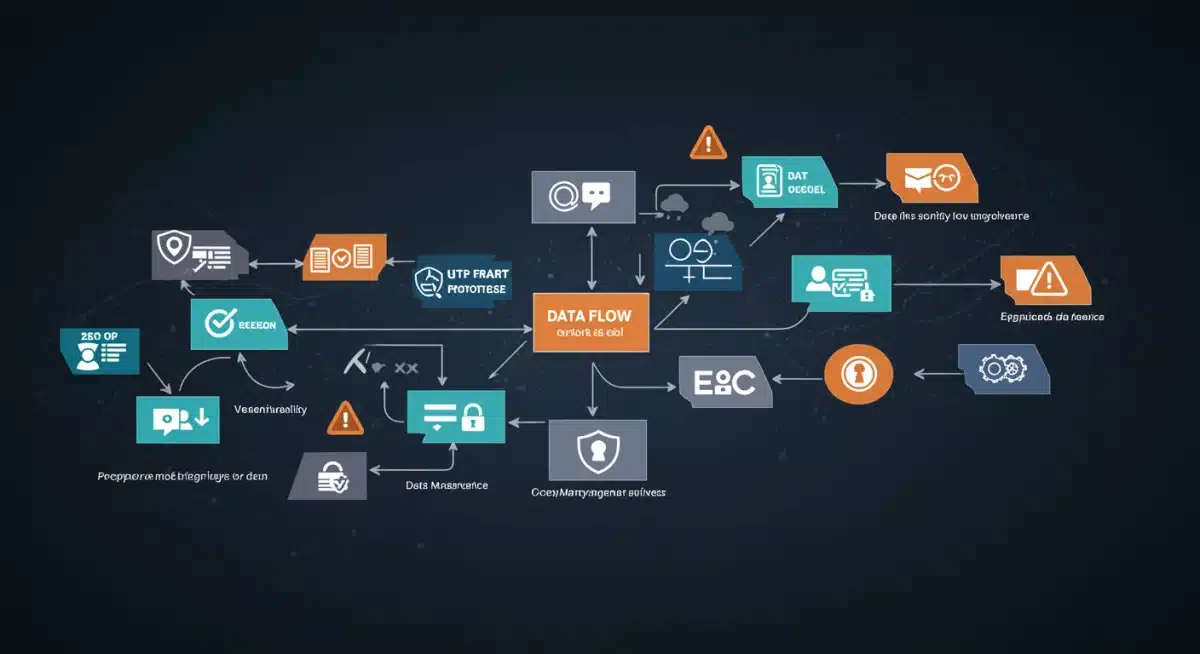
Beyond identifying data sources, businesses must meticulously map the flow of data throughout their organization and with third parties. Understanding how data moves, where it is transformed, and who accesses it is crucial for establishing proper controls under the FTC Data Guidelines 2026.
Equally important is the review and establishment of clear data retention policies. Companies must define how long specific types of data are kept and ensure these policies align with the data minimization principles of the FTC Data Guidelines 2026.
- Documenting data pathways from collection to deletion.
- Identifying all internal and external data recipients.
- Establishing clear data retention schedules.
- Ensuring data destruction methods are compliant.
Strategic Steps for FTC Data Guidelines 2026 Compliance
To proactively address the FTC Data Guidelines 2026, businesses should embark on a multi-faceted compliance strategy well in advance of November 2026. This includes conducting thorough privacy assessments, updating privacy policies, and implementing employee training programs.
A proactive approach mitigates risks and demonstrates a commitment to consumer privacy, which can be beneficial in the eyes of regulators. The time to act on the FTC Data Guidelines 2026 is now, not when the deadline looms.
Establishing a dedicated compliance team or assigning clear responsibilities for data privacy is also a critical step. This ensures ongoing oversight and adaptability as the understanding of FTC Data Guidelines 2026 evolves.
Conducting a Comprehensive Data Privacy Audit
The first strategic step is to conduct a comprehensive data privacy audit. This involves reviewing all current data collection, storage, processing, and sharing practices against the anticipated requirements of the FTC Data Guidelines 2026.
An audit helps identify existing gaps and areas of non-compliance, providing a clear roadmap for necessary changes. This foundational exercise is indispensable for any effective compliance program for the FTC Data Guidelines 2026.
Engaging external privacy experts can provide an objective assessment and specialized guidance during this critical phase. Their insights can be invaluable in navigating the complexities of the FTC Data Guidelines 2026.
Updating Privacy Policies and User Interfaces
Once data practices are audited and adjusted, businesses must update their privacy policies to reflect the new FTC Data Guidelines 2026 accurately. These policies must be clear, concise, and easily accessible to consumers.
Beyond policies, user interfaces where data is collected (e.g., website forms, app settings) must also be redesigned to facilitate granular consent and transparent data practices. User experience is now intrinsically linked to compliance with the FTC Data Guidelines 2026.
Regular review and updates to these policies and interfaces will be necessary to ensure ongoing alignment with regulatory interpretations and technological advancements. This continuous effort is key to sustained compliance with the FTC Data Guidelines 2026.
The Role of Data Protection Officers (DPOs)
With the forthcoming FTC Data Guidelines 2026, the role of a Data Protection Officer (DPO) or an equivalent privacy-focused position becomes increasingly critical for many organizations. These individuals are instrumental in overseeing compliance efforts and acting as a liaison with regulatory bodies.
A DPO can guide the implementation of new data practices, conduct internal audits, and ensure that employee training programs are effective. Their expertise is invaluable in interpreting the nuances of the FTC Data Guidelines 2026.
Even if not explicitly mandated for all businesses, designating a clear point person for data privacy demonstrates a serious commitment to compliance. This proactive step can significantly streamline the journey towards adherence with the FTC Data Guidelines 2026.
Preparing for Enforcement and Penalties
The FTC is known for its rigorous enforcement of consumer protection laws, and the new FTC Data Guidelines 2026 are expected to be no exception. Businesses must understand the potential penalties for non-compliance, which can include substantial fines, corrective actions, and reputational damage.
The financial impact of non-compliance can be severe, potentially reaching millions of dollars depending on the nature and scale of the violation. Beyond monetary penalties, the loss of consumer trust can have long-lasting negative effects on a brand’s viability under the FTC Data Guidelines 2026.
Proactive preparation is the best defense against enforcement actions. By demonstrating a good-faith effort to comply with the FTC Data Guidelines 2026, businesses can mitigate risks and position themselves favorably should any issues arise.
Understanding FTC Enforcement Powers
The FTC possesses broad enforcement powers, including the ability to issue cease and desist orders, impose civil penalties, and require companies to implement specific privacy and security programs. These powers underscore the seriousness of the FTC Data Guidelines 2026.
The Commission also has the authority to seek consumer redress, which can involve returning ill-gotten gains or providing compensation to affected individuals. This adds another layer of financial risk for non-compliant entities under the FTC Data Guidelines 2026.
Businesses should familiarize themselves with past FTC enforcement actions to understand the agency’s operational approach and the types of violations it prioritizes. This historical context provides valuable insight into the potential impact of the FTC Data Guidelines 2026.
Leveraging Technology for Compliance with FTC Data Guidelines 2026
Technology will play a pivotal role in achieving and maintaining compliance with the FTC Data Guidelines 2026. Investing in privacy-enhancing technologies (PETs) and automated compliance tools can significantly streamline the process and reduce human error.
Solutions for consent management platforms, data mapping tools, and automated data deletion systems are becoming indispensable. These technologies not only aid in compliance but can also improve operational efficiency and data governance for the FTC Data Guidelines 2026.
When selecting technology solutions, businesses should prioritize those that offer flexibility, scalability, and robust auditing capabilities. The right technological infrastructure is a cornerstone of effective compliance with the FTC Data Guidelines 2026.
| Key Point | Brief Description |
|---|---|
| November 2026 Deadline | New FTC data collection guidelines become mandatory. |
| Consent Management | Requires explicit, granular, and easily revocable consumer consent. |
| Data Minimization | Collect only essential data, review and update retention policies. |
| Compliance Pitfalls | Inadequate consent systems and neglected data inventory. |
Frequently Asked Questions About FTC Data Guidelines 2026
The most critical aspects include enhanced requirements for explicit and granular consumer consent, strict data minimization principles, and robust data security measures. Businesses must focus on these areas to ensure compliance and avoid potential penalties once the FTC Data Guidelines 2026 are fully enforced.
Small businesses will face similar compliance obligations as larger entities, particularly concerning data collection and consumer consent. While the scale of implementation may differ, the core principles of the FTC Data Guidelines 2026 apply universally. Proactive planning and leveraging simplified tools are crucial for small businesses.
The new FTC Data Guidelines on Data Collection are set to become effective in November 2026. This provides businesses with a critical window to assess their current data practices, implement necessary changes, and ensure full compliance before the enforcement date of the FTC Data Guidelines 2026.
The two main pitfalls are inadequate consent management systems that fail to meet new granularity and revocability standards, and neglecting comprehensive data inventory and mapping. Avoiding these requires significant investment in technology and a thorough understanding of data flows under the FTC Data Guidelines 2026.
Businesses can seek guidance from legal counsel specializing in data privacy, consult the official FTC website for updates and detailed information, and explore industry associations that offer compliance tools and best practices. Various privacy tech vendors also provide solutions tailored for the FTC Data Guidelines 2026.
What Happens Now
The impending FTC Data Guidelines 2026 represent a significant regulatory shift, demanding immediate and strategic action from businesses. Proactive engagement with these new rules is not just about avoiding penalties; it’s about building and maintaining consumer trust in an increasingly data-driven world.
Companies that prioritize robust consent management, comprehensive data inventory, and ongoing privacy assessments will be best positioned to thrive under the new framework. The clock is ticking towards November 2026, making diligent preparation for the FTC Data Guidelines 2026 an imperative for all.
Stay informed, consult experts, and begin implementing the necessary changes now to ensure your business remains compliant and competitive when the FTC Data Guidelines 2026 take full effect.