2026 Federal Infrastructure Bill: Unseen Impact on 5 US Industries

The latest developments regarding the 2026 Federal Infrastructure Bill reveal significant, often unseen, impacts on five major US industries. This report provides crucial facts, verified analyses, and what stakeholders need to monitor as this landmark legislation unfolds across the United States.
A Special Report: The Unseen Impact of the 2026 Federal Infrastructure Bill on 5 Major US Industries is now shaping the national economic landscape. New details, recently released by federal agencies and industry analysts, underscore the profound and often overlooked ramifications of this legislative package.
This update prioritizes what has changed, why these shifts matter, and what businesses and citizens alike need to watch next. Our analysis is presented in a straightforward, objective news format, providing context and verified insights into this critical development.
Understanding the Scope of the 2026 Federal Infrastructure Bill
The 2026 Federal Infrastructure Bill represents an unprecedented commitment to modernizing America’s foundational systems. It extends beyond traditional roads and bridges, encompassing a broad spectrum of investments from digital infrastructure to sustainable energy solutions.
Federal officials have outlined a strategic framework designed to revitalize key sectors, aiming for long-term economic growth and enhanced national resilience. This comprehensive approach ensures that the impact of the 2026 Federal Infrastructure Bill will be felt across diverse industries.
Initial projections indicate that the bill’s funding mechanisms and regulatory changes will create both opportunities and challenges for businesses nationwide. Understanding these nuances is crucial for navigating the evolving economic environment shaped by the 2026 Federal Infrastructure Bill.
Key Investment Areas and Funding Mechanisms
The 2026 Federal Infrastructure Bill allocates substantial funds to several critical areas. These include significant investments in transportation, energy grids, broadband expansion, water systems, and public transit.
Funding will be distributed through a combination of direct federal grants, state-matching programs, and public-private partnerships. This diversified approach aims to maximize efficiency and encourage local project development, directly influenced by the 2026 Federal Infrastructure Bill.
The bill also introduces new tax incentives and regulatory adjustments designed to spur private sector investment in infrastructure projects. These measures are expected to accelerate project timelines and foster innovation, driving the overall impact of the 2026 Federal Infrastructure Bill.
- Transportation upgrades: modernizing highways, bridges, and public transit.
- Energy infrastructure: investing in renewable energy and grid resilience.
- Broadband access: expanding high-speed internet to underserved areas.
- Water systems: improving potable water and wastewater treatment facilities.
Impact on the Construction and Engineering Industry
The construction and engineering sector stands as one of the primary beneficiaries, and simultaneously, one of the most challenged by the 2026 Federal Infrastructure Bill. A surge in demand for civil engineering services, heavy equipment, and skilled labor is already underway.
Companies are reporting increased bidding activity and project backlogs, signaling a robust period of expansion. However, this growth also brings pressures related to material costs, supply chain disruptions, and a persistent shortage of qualified workers, all influenced by the 2026 Federal Infrastructure Bill.
Industry leaders are strategizing to adapt to these conditions, investing in technology and workforce development to meet the demands generated by the 2026 Federal Infrastructure Bill. This period requires agile responses and forward-thinking solutions to capitalize on the opportunities presented.
Labor Shortages and Workforce Development
The influx of projects funded by the 2026 Federal Infrastructure Bill exacerbates existing labor shortages within the construction and engineering fields. There is a critical need for skilled tradespeople, project managers, and specialized engineers.
To address this, vocational schools and community colleges are partnering with industry associations to develop targeted training programs. These initiatives aim to upskill the current workforce and attract new talent, ensuring the successful execution of projects under the 2026 Federal Infrastructure Bill.
Federal and state governments are also exploring incentives for apprenticeships and on-the-job training. These efforts are vital to building a sustainable talent pipeline capable of sustaining the long-term demands of the 2026 Federal Infrastructure Bill.
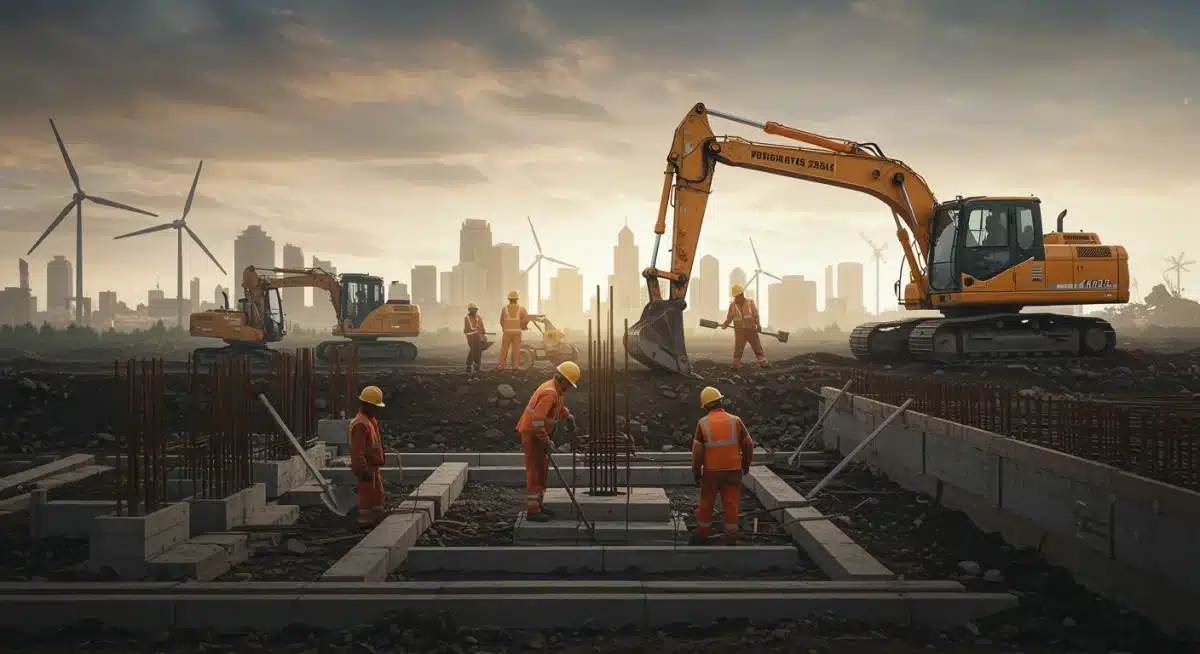
Furthermore, the emphasis on modern infrastructure, including smart cities and green building practices, necessitates new skill sets. This shift requires continuous learning and adaptation within the workforce to meet the evolving requirements of projects funded by the 2026 Federal Infrastructure Bill.
Transformation in the Manufacturing Sector
The manufacturing sector is experiencing a significant transformation driven by the 2026 Federal Infrastructure Bill, particularly in areas related to construction materials, heavy machinery, and renewable energy components. Domestic production is receiving a substantial boost through ‘Buy American’ provisions and enhanced supply chain resilience initiatives.
This legislative push aims to reduce reliance on foreign imports and strengthen indigenous manufacturing capabilities. Companies are re-evaluating their production strategies and expanding facilities to meet the anticipated demand for infrastructure-related goods, all catalyzed by the 2026 Federal Infrastructure Bill.
The emphasis on sustainable infrastructure also fosters innovation in green manufacturing processes and materials. This creates new market segments and opportunities for businesses willing to invest in environmentally friendly solutions, guided by the objectives of the 2026 Federal Infrastructure Bill.
Supply Chain Reconfiguration and Domestic Production
The 2026 Federal Infrastructure Bill places a strong emphasis on strengthening domestic supply chains for critical infrastructure components. This includes everything from steel and concrete to advanced electronic controls for smart grids.
Manufacturers are investing in reshoring and expanding production facilities within the United States. This strategic pivot aims to mitigate future supply chain vulnerabilities and ensure a steady availability of materials for projects funded by the 2026 Federal Infrastructure Bill.
Government incentives and partnerships are encouraging this shift, creating a more robust and self-reliant manufacturing ecosystem. The long-term goal is to establish resilient supply networks that can support ongoing infrastructure development, as envisioned by the 2026 Federal Infrastructure Bill.
Evolution of the Technology and Telecommunications Industry
The technology and telecommunications sector is undergoing rapid evolution due to the 2026 Federal Infrastructure Bill, particularly in broadband expansion and the development of smart infrastructure solutions. The push for universal high-speed internet access is driving significant investment in fiber optics, 5G networks, and satellite broadband.
This initiative aims to bridge the digital divide, providing economic and educational opportunities to underserved communities. Technology companies are poised to capitalize on these widespread deployment efforts, directly supported by the 2026 Federal Infrastructure Bill.
Beyond connectivity, the bill also promotes the integration of smart city technologies, IoT devices, and advanced data analytics into new and existing infrastructure. This creates a fertile ground for innovation and new service offerings within the tech industry, spurred by the 2026 Federal Infrastructure Bill.
Broadband Expansion and Digital Equity
A cornerstone of the 2026 Federal Infrastructure Bill is the commitment to ensuring every American has access to reliable, affordable high-speed internet. This involves massive undertakings in laying new fiber optic cables and upgrading existing networks.
Telecommunications providers are collaborating with local governments and community organizations to identify priority areas for expansion. The goal is to achieve digital equity, where geographic location no longer dictates access to essential online services, an objective central to the 2026 Federal Infrastructure Bill.
The economic benefits extend beyond connectivity, fostering remote work, telehealth, and online education opportunities. This widespread digital transformation is a direct consequence of the ambitious goals set forth by the 2026 Federal Infrastructure Bill.
The Energy Sector’s Shift Towards Renewables
The energy sector is experiencing a profound shift towards renewable sources and grid modernization, largely propelled by the 2026 Federal Infrastructure Bill. Significant investments are targeting solar, wind, geothermal, and hydropower projects, alongside upgrades to the national electricity grid to accommodate these new energy flows.
Utility companies and independent power producers are accelerating their transition away from fossil fuels, driven by both federal incentives and environmental mandates. This strategic pivot is redefining energy production and distribution nationwide, under the influence of the 2026 Federal Infrastructure Bill.
The bill also emphasizes energy storage solutions and smart grid technologies to enhance reliability and efficiency. This holistic approach ensures a more resilient and sustainable energy future for the United States, shaped by the provisions of the 2026 Federal Infrastructure Bill.
Grid Modernization and Energy Resilience
Modernizing the aging US electricity grid is a critical component of the 2026 Federal Infrastructure Bill. This involves upgrading transmission lines, implementing advanced monitoring systems, and enhancing cybersecurity measures.
The aim is to create a more robust and resilient grid capable of handling increased demand and integrating diverse energy sources, particularly renewables. These upgrades are essential for preventing outages and ensuring stable power delivery across the nation, a key objective of the 2026 Federal Infrastructure Bill.
Furthermore, investments in microgrids and localized energy solutions are promoting greater energy independence and reducing vulnerability to large-scale disruptions. This focus on resilience is a direct response to climate challenges and national security concerns, addressed by the 2026 Federal Infrastructure Bill.
Logistics and Transportation: Enhancing Efficiency
The logistics and transportation industry is set for a major overhaul, with the 2026 Federal Infrastructure Bill targeting improvements in ports, airports, railways, and roadways. These enhancements are designed to streamline supply chains, reduce transit times, and lower operational costs for businesses.
Investments in upgrading freight rail networks and intermodal facilities are expected to significantly improve the movement of goods across the country. This efficiency gain will benefit manufacturers, retailers, and consumers alike, as a direct outcome of the 2026 Federal Infrastructure Bill.
Furthermore, the bill allocates funds for the adoption of innovative transportation technologies, such as intelligent traffic systems and electric vehicle charging infrastructure. These advancements are set to modernize the entire transportation ecosystem, largely influenced by the 2026 Federal Infrastructure Bill.
Port and Freight Modernization
US ports are receiving substantial funding for expansion and technological upgrades, aiming to increase capacity and improve cargo handling efficiency. This is crucial for managing growing international trade volumes and reducing bottlenecks in the global supply chain.
Investments in automation, deeper shipping channels, and improved intermodal connections are transforming port operations. These enhancements are vital for maintaining the competitiveness of American trade, a key focus within the 2026 Federal Infrastructure Bill.

Similarly, freight rail systems are being modernized to support faster and more reliable movement of goods over long distances. These improvements collectively ensure a more robust and responsive national logistics network, heavily influenced by the 2026 Federal Infrastructure Bill.
Environmental and Social Implications of the Bill
Beyond economic shifts, the 2026 Federal Infrastructure Bill carries significant environmental and social implications. The emphasis on green infrastructure and sustainable practices aims to mitigate climate change impacts, promote biodiversity, and enhance public health.
Projects include investments in climate-resilient infrastructure, such as coastal protection and stormwater management systems. These initiatives are designed to safeguard communities from extreme weather events, a crucial aspect of the 2026 Federal Infrastructure Bill.
Socially, the bill seeks to create equitable access to essential services and economic opportunities, particularly in historically underserved areas. This includes job creation, improved public spaces, and enhanced community connectivity, all driven by the comprehensive vision of the 2026 Federal Infrastructure Bill.
Promoting Green Infrastructure and Sustainability
A core tenet of the 2026 Federal Infrastructure Bill is the integration of green infrastructure solutions into all new and existing projects. This includes permeable pavements, green roofs, and natural stormwater management systems.
These sustainable practices not only reduce environmental impact but also offer long-term cost savings and improved community aesthetics. The widespread adoption of such approaches is a testament to the bill’s commitment to a sustainable future, directly influenced by the 2026 Federal Infrastructure Bill.
Furthermore, the bill supports research and development in sustainable materials and construction techniques. This fosters innovation within the construction sector, pushing the industry towards more environmentally responsible practices, aligned with the goals of the 2026 Federal Infrastructure Bill.
Challenges and Opportunities for Businesses
While the 2026 Federal Infrastructure Bill presents immense opportunities, businesses must also navigate significant challenges. These include increased competition for contracts, regulatory complexities, and the need for substantial capital investment to scale operations.
Small and medium-sized enterprises (SMEs) face unique hurdles in securing funding and competing with larger corporations. However, the bill also includes provisions aimed at supporting minority-owned and small businesses, fostering a more inclusive economic landscape under the 2026 Federal Infrastructure Bill.
Opportunities abound for companies that can innovate, adapt to new technologies, and demonstrate a commitment to sustainable practices. Strategic partnerships and agile business models will be key to thriving in this evolving environment shaped by the 2026 Federal Infrastructure Bill.
Navigating Regulatory Frameworks and Compliance
The 2026 Federal Infrastructure Bill introduces new regulatory frameworks and compliance requirements, particularly concerning environmental standards, labor practices, and procurement processes. Businesses must ensure strict adherence to these guidelines to avoid penalties and delays.
Understanding the nuances of federal, state, and local regulations is paramount for successful project execution. Companies are investing in legal and compliance expertise to navigate this complex landscape, ensuring their operations align with the mandates of the 2026 Federal Infrastructure Bill.
Furthermore, transparency and accountability are emphasized throughout the bill, requiring robust reporting and oversight mechanisms. This ensures that public funds are utilized effectively and ethically, reflecting the core principles of the 2026 Federal Infrastructure Bill.
| Key Impact Area | Brief Description |
|---|---|
| Construction Growth | Increased demand for projects and skilled labor across the nation. |
| Manufacturing Boost | Reshoring and expansion of domestic production for materials and components. |
| Tech & Telecom Expansion | Significant investment in broadband and smart infrastructure technologies. |
| Energy Transition | Accelerated shift towards renewable energy and grid modernization. |
Frequently Asked Questions About the 2026 Federal Infrastructure Bill
The bill aims to modernize America’s aging infrastructure, including transportation, energy, broadband, and water systems. Its core objectives are to stimulate economic growth, create jobs, enhance national competitiveness, and build more resilient and sustainable communities across the US.
The five major industries most significantly impacted are Construction and Engineering, Manufacturing, Technology and Telecommunications, Energy, and Logistics and Transportation. These sectors will experience substantial shifts in demand, investment, and operational strategies due to the bill.
The bill allocates significant funding towards green infrastructure, renewable energy projects, and climate-resilient infrastructure. It promotes sustainable practices, reduces carbon emissions, and invests in technologies that help communities adapt to and mitigate the effects of climate change.
The 2026 Federal Infrastructure Bill includes provisions to support small and minority-owned businesses through set-aside contracts and technical assistance programs. While competition will increase, significant opportunities for growth and partnership exist for agile SMEs in various sectors.
While immediate effects are already visible in increased project activity and planning, the full, long-term impact of the 2026 Federal Infrastructure Bill will unfold over the next decade. Continuous monitoring of project completions and economic indicators is essential to track its comprehensive effects.
Looking Ahead: The Enduring Impact of the Bill
The 2026 Federal Infrastructure Bill is not merely a short-term spending package; it represents a foundational shift in national economic policy. Its enduring impact will reshape competitive landscapes, foster new industries, and redefine America’s global standing in the coming decades.
Stakeholders must remain vigilant, monitoring policy adjustments, funding disbursements, and project outcomes closely. The successful implementation of the 2026 Federal Infrastructure Bill will hinge on sustained collaboration between government, industry, and local communities.
Ultimately, the bill’s legacy will be measured by its ability to deliver a modern, resilient, and equitable infrastructure system for all Americans. The journey ahead promises both significant challenges and transformative opportunities.