US Supreme Court Digital Privacy: 3 Key Changes by July 2026
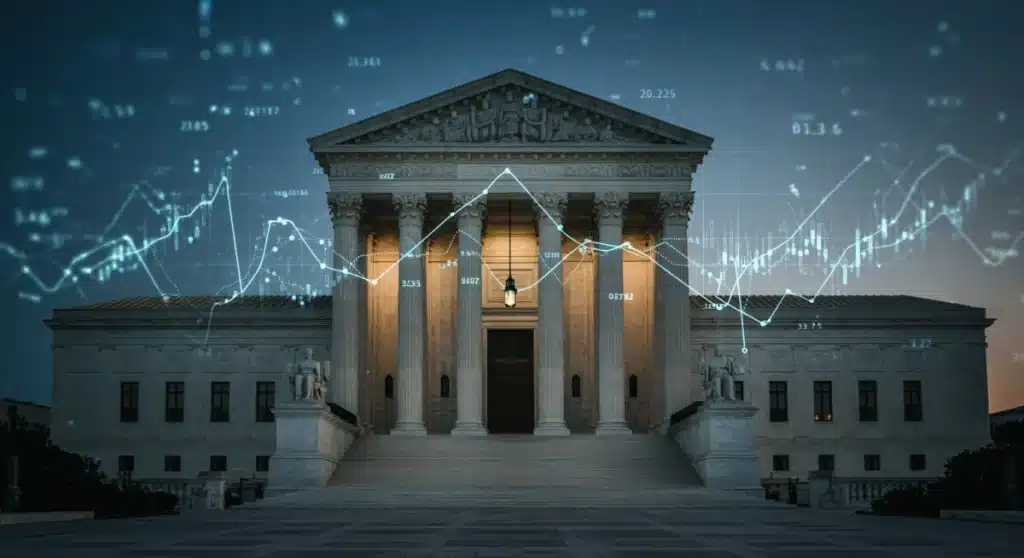
The US Supreme Court’s landmark decision on digital privacy rights, expected by July 2026, promises three significant changes. This ruling will reshape how personal data is handled and protected across the United States. Individuals and corporations must prepare for these pivotal legal shifts.
The anticipation builds around the US Supreme Court Digital Privacy decision, slated for release by July 2026. This landmark ruling is poised to redefine digital privacy rights for millions of Americans, introducing three key changes that will ripple through technology, commerce, and daily life. Stakeholders across the nation are closely monitoring developments, preparing for a new era of data protection and individual liberties.
Anticipating the Landmark US Supreme Court Digital Privacy Ruling
The legal community and technology sectors are abuzz with speculation regarding the forthcoming decision from the US Supreme Court on digital privacy rights. This ruling is not merely a legal formality; it represents a critical juncture in the ongoing dialogue between technological advancement and fundamental human rights.
Experts anticipate this decision will set new precedents for how personal data is collected, stored, and utilized by both private entities and government agencies. The focus remains on establishing a delicate balance that fosters innovation while safeguarding individual privacy in an increasingly digital world.
The implications extend far beyond legal texts, potentially influencing everything from app development and online advertising to law enforcement surveillance and national security protocols. Understanding the scope of these changes is paramount for all citizens and organizations operating within the United States.
The Genesis of a Pivotal Decision: Background and Precedents
The journey to this impending US Supreme Court Digital Privacy decision is rooted in decades of evolving technology and the persistent challenge of adapting constitutional principles to new digital realities. Prior rulings, such as those concerning wiretapping and electronic surveillance, have laid some groundwork, but the advent of pervasive internet connectivity and big data has introduced unprecedented complexities.
Key cases leading up to this moment have highlighted the gaps in existing legal frameworks, particularly concerning data held by third-party service providers and the extent of government access to digital communications. These legal battles have underscored the urgent need for clearer guidelines on what constitutes a reasonable expectation of privacy in the digital realm.
The Court’s consideration of these issues reflects a broader societal demand for greater control over personal information and accountability from entities that collect and process it. This upcoming ruling aims to provide much-needed clarity and establish a more robust foundation for digital privacy rights.
Historical Context of Digital Privacy Rights
The concept of privacy has been a cornerstone of American jurisprudence, evolving from physical spaces to communication methods. Early interpretations of the Fourth Amendment focused on tangible property and physical searches, but technology has consistently challenged these traditional boundaries.
Landmark cases like Katz v. United States (1967) introduced the “reasonable expectation of privacy” test, extending protections to conversations. However, this test has proven increasingly difficult to apply in the context of cloud computing, social media, and ubiquitous data collection, setting the stage for the current US Supreme Court Digital Privacy debate.
- Early privacy cases primarily addressed physical intrusions and traditional communication methods.
- The “reasonable expectation of privacy” test emerged as a crucial standard for evolving technologies.
- Digital platforms and data accumulation have created new challenges for applying established privacy principles.
Driving Factors Behind the Supreme Court’s Intervention
Several factors have converged to necessitate the Supreme Court’s intervention in digital privacy. The exponential growth of data collection by corporations, often without explicit user consent, has raised alarms about surveillance capitalism and its impact on individual autonomy.
Furthermore, government requests for digital data, often under broad interpretations of existing laws, have fueled concerns about civil liberties and the potential for unchecked state power. These pressures, combined with a fragmented legal landscape across states, have made a unified federal standard imperative, pushing the US Supreme Court Digital Privacy issue to the forefront.
The increasing sophistication of artificial intelligence and machine learning, which thrive on vast datasets, also adds another layer of urgency. The Court must consider how its ruling will impact the development and deployment of these transformative technologies while protecting fundamental rights.
Key Change 1: Redefining “Reasonable Expectation of Privacy” in the Digital Age
One of the most anticipated outcomes of the US Supreme Court Digital Privacy decision revolves around a fundamental redefinition of the “reasonable expectation of privacy.” This legal standard, established decades ago, will likely be updated to reflect the realities of modern digital life, where personal information is constantly generated and shared across various platforms.
The Court is expected to address whether individuals have a reasonable expectation of privacy in data voluntarily shared with third-party service providers, such as social media companies, email hosts, and cloud storage services. This could significantly alter the legal landscape for data collection and government access.
A strengthened definition could empower individuals with greater control over their digital footprint, limiting the ability of both corporations and government agencies to access and utilize personal data without explicit consent or a more stringent legal process. This would be a monumental shift in how digital interactions are legally viewed.
Impact on Third-Party Doctrine
The Third-Party Doctrine, which generally holds that individuals have no reasonable expectation of privacy in information voluntarily disclosed to third parties, has been a contentious point in digital privacy law. Many legal scholars and privacy advocates argue this doctrine is outdated in an era where essential communication and data storage are almost exclusively outsourced to third-party providers.
The US Supreme Court Digital Privacy ruling could significantly modify or even overturn aspects of this doctrine, potentially requiring warrants for access to data held by service providers that was previously accessible through subpoenas or other less restrictive means. Such a change would have profound implications for law enforcement investigations and corporate data practices.
This re-evaluation acknowledges that sharing data with a third party for specific services does not equate to relinquishing all privacy rights over that data. It suggests a more nuanced understanding of consent and ownership in the digital sphere, reflecting contemporary data realities.

Key Change 2: Enhanced Protections for Digital Communications and Data
The second major change expected from the US Supreme Court Digital Privacy decision concerns enhanced protections for digital communications and stored data. This could manifest as stricter requirements for government agencies seeking access to encrypted messages, browsing history, and other sensitive digital information.
The ruling may establish a higher bar for warrant applications, demanding more specific probable cause and a narrower scope for data requests. This move would aim to prevent broad, dragnet-style data collection that has been a concern for civil liberties advocates.
Furthermore, the decision could introduce new standards for data retention by private companies, potentially limiting how long personal data can be stored without a compelling business or legal justification. This would significantly impact data management policies across various industries.
Implications for Encryption and Surveillance
Encryption has become a battleground between privacy advocates and law enforcement agencies, with the latter often seeking “backdoors” or compelled decryption to access criminal communications. The US Supreme Court Digital Privacy ruling could weigh in on this complex issue, potentially affirming the right to strong encryption.
Should the Court side with stronger encryption protections, it would have far-reaching effects on surveillance capabilities, potentially forcing a re-evaluation of investigative techniques in the digital age. Conversely, a ruling that weakens encryption could spark widespread public outcry and raise significant security concerns.
- The ruling could either strengthen or weaken the legal standing of end-to-end encryption.
- Government surveillance practices may face new legal hurdles or, conversely, gain broader authority.
- The balance between national security and individual privacy in digital communications is at stake.
Corporate Data Retention and Access Standards
Beyond government surveillance, the US Supreme Court Digital Privacy decision is also expected to influence corporate data retention policies. Currently, many companies retain vast amounts of user data for extended periods, often citing business intelligence or potential legal obligations.
The Court might introduce stricter guidelines on how long companies can hold onto personal data, particularly if it is not directly necessary for the service provided. This could lead to a significant overhaul of data management practices, potentially reducing the risk of data breaches and unauthorized access.
New standards for corporate data access by third parties, including advertisers and researchers, are also anticipated. This would aim to give individuals more control over how their data is shared and used in the broader digital ecosystem.
Key Change 3: Establishing New Remedies and Enforcement Mechanisms
The third crucial aspect of the upcoming US Supreme Court Digital Privacy decision is the potential establishment of new remedies and enforcement mechanisms for privacy violations. Current recourse for individuals whose digital privacy rights have been infringed can be limited and difficult to pursue.
The ruling could clarify the legal standing for individuals to sue for damages resulting from privacy breaches or unauthorized data access, potentially creating a more robust framework for accountability. This would empower citizens to seek justice when their digital rights are violated.
Additionally, the Court might provide guidance on the role of federal agencies in enforcing digital privacy standards, potentially vesting more authority in bodies like the Federal Trade Commission (FTC) or establishing new regulatory oversight. This would ensure that the new privacy protections have teeth.
Strengthening Individual Recourse for Privacy Violations
A significant challenge in the current legal landscape is the difficulty for individuals to obtain redress for digital privacy violations. Proving harm and navigating complex legal processes often deters victims from pursuing claims against powerful corporations or government entities.
The US Supreme Court Digital Privacy ruling could lower the bar for demonstrating harm, making it easier for individuals to bring lawsuits and seek compensation. This would provide a powerful incentive for organizations to adhere strictly to privacy protections, knowing that non-compliance carries significant legal risk.
The decision might also address class-action lawsuits in the context of digital privacy, opening avenues for collective action when large numbers of individuals are affected by systemic privacy failures. This could be a game-changer for consumer advocacy.
Role of Federal Agencies in Enforcement
Currently, the enforcement of digital privacy laws is fragmented, with various federal and state agencies having overlapping or limited jurisdictions. The US Supreme Court Digital Privacy decision could provide a clearer mandate for federal agencies, streamlining enforcement efforts and ensuring consistent application of new privacy standards.
The FTC, for instance, might see its powers expanded to investigate and penalize companies that fail to protect user data adequately. This would provide a more unified and effective approach to safeguarding digital privacy across the nation, reducing regulatory arbitrage.
Clarity on enforcement roles would also benefit businesses, providing a more predictable regulatory environment and reducing compliance ambiguities. This proactive guidance from the Court would be invaluable for fostering trust in the digital economy.

Broader Societal and Economic Impact of the Ruling
The US Supreme Court Digital Privacy decision, while primarily a legal matter, will undoubtedly cast a wide net over society and the economy. The way individuals interact with technology, the business models of tech giants, and even the fabric of democratic processes could see significant shifts.
Economically, industries heavily reliant on data, such as advertising, healthcare, and finance, will need to adapt their practices to comply with new regulations. This could spur innovation in privacy-enhancing technologies and create new market opportunities for privacy-focused services.
Socially, a strengthened digital privacy framework could foster greater trust in online platforms and digital services, encouraging more widespread adoption and participation. Conversely, overly restrictive measures could stifle innovation or create barriers to legitimate data uses.
Impact on Technology Companies and Innovation
Technology companies, particularly those in social media, search, and e-commerce, operate on business models often predicated on extensive data collection and analysis. The US Supreme Court Digital Privacy ruling could force these companies to fundamentally rethink their data practices, moving towards more privacy-centric designs.
This might involve implementing privacy-by-design principles, offering users more granular control over their data, and being more transparent about data usage. While initially challenging, this shift could ultimately lead to more ethical and sustainable innovation, focusing on user trust.
- Tech companies may need to revise data collection, storage, and usage policies.
- Innovation in privacy-enhancing technologies could see a significant boost.
- Business models reliant on extensive data mining may face substantial disruption.
Effect on Government Data Access and National Security
Government agencies, including law enforcement and intelligence services, rely on digital data for investigations and national security operations. The US Supreme Court Digital Privacy decision could impose new constraints on their ability to access this data, requiring more rigorous legal processes and oversight.
This could necessitate a re-evaluation of existing surveillance programs and a shift towards more targeted, evidence-based data requests. While potentially hindering some investigative avenues, it could also reinforce public trust in government operations by ensuring robust protections for civil liberties.
The balance between national security imperatives and individual privacy rights is a delicate one, and the Court’s ruling will inevitably reshape this critical equilibrium. It will force a national conversation on how best to protect both citizens and the state in the digital age.
Preparing for the Post-Ruling Landscape: What to Expect by July 2026
As the July 2026 deadline for the US Supreme Court Digital Privacy decision approaches, individuals, businesses, and government entities must proactively prepare for the impending changes. This involves staying informed, reviewing current practices, and anticipating potential adjustments to legal and operational frameworks.
For individuals, understanding their newly defined rights will be crucial for navigating the digital world more securely and confidently. This may include adjusting privacy settings, scrutinizing data consent forms, and advocating for stronger protections.
Businesses, especially those handling significant amounts of personal data, should begin auditing their data collection, storage, and processing practices against potential new standards. Legal counsel will be essential in interpreting the ruling and ensuring compliance.
Recommendations for Individuals and Consumers
In anticipation of the US Supreme Court Digital Privacy ruling, individuals should take proactive steps to safeguard their digital privacy. This includes regularly reviewing the privacy policies of online services they use and understanding what data is being collected and how it is being utilized.
Consumers should also become more familiar with their rights regarding data access, correction, and deletion, which may be expanded by the Court’s decision. Utilizing privacy-enhancing tools and being mindful of information shared on public platforms are also prudent measures.
Staying informed through reliable news sources about the specifics of the ruling and its practical implications will empower individuals to exercise their rights effectively in the new digital privacy landscape. This is a critical moment for personal digital autonomy.
- Review and adjust privacy settings on social media and other online platforms.
- Familiarize yourself with the terms of service and data policies of services you use.
- Consider using privacy-focused browsers and search engines.
Guidance for Businesses and Organizations
Businesses, particularly those operating in data-intensive sectors, must view the upcoming US Supreme Court Digital Privacy decision as a call to action. Proactive engagement with legal experts to assess potential impacts on data processing, storage, and sharing practices is imperative.
Developing a robust compliance strategy will be key, which may involve updating privacy policies, obtaining explicit user consent for data collection, and investing in advanced data security measures. Training employees on new privacy protocols will also be essential.
Organizations should also monitor legislative responses that may follow the Supreme Court’s ruling, as Congress could enact new laws to further codify or expand upon the Court’s directives. Adapting swiftly to these changes will be critical for maintaining trust and avoiding legal repercussions.
| Key Change | Brief Description of Impact |
|---|---|
| Redefined Privacy Expectation | Updates “reasonable expectation of privacy” for digital data, impacting third-party doctrine. |
| Enhanced Data Protections | Stricter rules for government access to digital communications and corporate data retention. |
| New Remedies & Enforcement | Establishes clearer paths for individuals to seek redress and defines agency enforcement roles. |
| Broader Societal Shifts | Influences tech innovation, government surveillance, and public trust in digital services. |
Frequently Asked Questions About US Supreme Court Digital Privacy
The landmark decision by the US Supreme Court on digital privacy rights is anticipated to be released by July 2026. This timeline allows for thorough deliberation on the complex legal and technological issues presented before the Court.
It’s a legal standard determining when an individual’s privacy is protected by the Fourth Amendment. The Court will likely redefine this in the context of digital data, especially concerning information shared with third-party service providers and online platforms.
The ruling is expected to impose stricter requirements for government agencies seeking access to digital communications and stored data. This could mean a higher bar for obtaining warrants and more specific probable cause for data requests, enhancing individual protections.
Yes, the decision is likely to empower individuals with greater control over their digital footprint. This could include stronger rights to consent, access, and potentially delete personal data held by corporations, fostering greater digital autonomy.
Businesses should proactively review their data collection, storage, and processing practices, consulting legal counsel to understand potential impacts. Updating privacy policies, enhancing data security, and ensuring explicit user consent will be crucial for compliance.
Looking Ahead: The Evolving Landscape of Digital Privacy
The impending US Supreme Court Digital Privacy decision by July 2026 marks a watershed moment for digital rights in the United States. This ruling will not merely adjust legal interpretations but will fundamentally reshape the relationship between individuals, technology, and governance. It underscores a growing recognition that digital privacy is not a luxury but a fundamental right deserving robust protection.
As the legal landscape evolves, ongoing vigilance from individuals, proactive adaptation from businesses, and thoughtful implementation by government agencies will be paramount. The true impact of this decision will unfold over time, influencing future legislative efforts and setting new global benchmarks for digital autonomy. This is a critical development that demands continuous attention and informed engagement from all stakeholders.