Top 8 Eco-Conscious Fashion Brands Defining American

Eco-conscious fashion brands in 2026 are bringing repair programs, recycled materials, organic fibers, and more transparent sourcing into American wardrobes. Discover eight notable brands, their sustainability initiatives, and what consumers should evaluate before buying.
Eco-conscious fashion brands in 2026 offer American consumers more options for building wardrobes around durability, responsible materials, and thoughtful purchasing decisions.
From outdoor clothing to everyday essentials and activewear, several companies have developed programs focused on repair, resale, material innovation, and supply chain accountability.
This guide examines eight brands with identifiable environmental or social initiatives. It also explains their limitations and how shoppers can distinguish meaningful progress from broad marketing claims.
The Rise of Sustainable Fashion in America
The fashion industry’s environmental challenges include resource consumption, textile waste, chemical use, and greenhouse gas emissions across global supply chains.
Eco-conscious fashion brands in 2026 are responding through different strategies, from introducing preferred materials to developing services that extend the life of existing garments.
These practices deserve careful evaluation. No clothing brand is impact-free, and a sustainable-looking collection does not automatically demonstrate responsible production across an entire business.
Consumer Demand and Industry Response

Some American shoppers increasingly consider material composition, product durability, and corporate transparency alongside price, fit, and appearance.
For eco-conscious fashion brands in 2026, explaining sourcing practices and offering useful product information can help customers make better comparisons.
However, consumer interest is not uniform across demographic groups or purchasing categories. Affordability, availability, and individual preferences remain important influences.
- Material Information: Understanding fiber composition and sourcing.
- Product Durability: Choosing garments designed for repeated use.
- Labor Practices: Reviewing worker protection policies and available evidence.
- Repair and Resale: Looking for opportunities to extend garment life.
Why Transparency Matters More Than Green Marketing
Environmental claims are more useful when brands explain what is being measured, which products are covered, and whether information can be independently checked.
Consumers comparing eco-conscious fashion brands in 2026 should look beyond phrases such as “planet-friendly” or “conscious collection” without supporting details.
Published impact reports, recognizable certifications, and specific product information can help. Even these measures require context because certifications often cover limited aspects of production.
Fashion companies can also improve transparency by explaining unresolved challenges, rather than presenting sustainability as a completed achievement.
For shoppers interested in broader conscious consumption, the most useful habit is evaluating whether a purchase is necessary and likely to be worn regularly.
Reducing unnecessary purchases, repairing clothing, and buying secondhand can be valuable regardless of which brand originally manufactured an item.
Pioneering Material Innovation for a Greener Future
Material selection influences several environmental characteristics of clothing, including agricultural inputs, energy use, water consumption, and end-of-life options.
Many eco-conscious fashion brands in 2026 are incorporating organic cotton, recycled polyester, responsibly sourced cellulosic fibers, and other alternatives.
However, a material should not be described as universally sustainable based on its name alone. Manufacturing methods, lifespan, chemical management, and disposal all matter.
Beyond Organic Cotton: New Material Options
Organic cotton production uses agricultural standards that restrict certain synthetic inputs, while recycled fibers can reduce demand for some virgin materials.
Regenerated fibers, including some lyocell products, may involve manufacturing systems designed to recover processing chemicals and improve resource efficiency.
For eco-conscious fashion brands in 2026, the important question is whether these material choices produce measurable improvements under relevant conditions.
- Organic Cotton: Agricultural production under applicable organic standards.
- Recycled Polyester: Fibers manufactured using recovered plastic-based materials.
- Regenerated Nylon: Nylon produced using recycled feedstocks.
- Lyocell: A regenerated cellulosic fiber whose production impact depends on the process and sourcing.
- Linen and Hemp: Plant-based fibers with performance and environmental characteristics that vary by production method.
Why Fabric Durability Still Matters
A garment made from a preferred material can still have a short useful life if its construction is poor or its care requirements are impractical.
The strongest examples among eco-conscious fashion brands in 2026 combine material decisions with fit, quality control, and long-term usability.
Consumers should evaluate seams, fabric weight, washing instructions, and the likelihood that a garment will remain useful within their existing wardrobe.
Ethical Production and Fair Labor Practices
Environmental responsibility is only part of fashion sustainability. Worker safety, compensation, and conditions throughout the supply chain also require attention.
Some eco-conscious fashion brands in 2026 publish supplier information, participate in external assessments, or use selected third-party certification programs.
These initiatives can support accountability, but participation does not prove that every worker receives a living wage or that violations never occur.
Transparency and Accountability in the Supply Chain
Fashion supply chains often involve numerous stages, including fiber production, spinning, dyeing, cutting, sewing, and distribution.
Brands can improve visibility by disclosing manufacturing partners, publishing sourcing policies, and reporting measurable progress against stated commitments.
Independent standards such as Fair Trade and GOTS may provide useful evidence for specified products or facilities, but their exact scope should always be checked.
How Consumers Can Evaluate Labor Claims
When reviewing eco-conscious fashion brands in 2026, examine whether labor policies describe actual monitoring practices and procedures for addressing violations.
Look for information about supplier relationships, worker grievance mechanisms, wage improvement programs, and externally verified assessments.
A company’s ethical commitment is more credible when it acknowledges unresolved issues and provides regular updates rather than relying on broad promises.
Circular Economy Principles: Redefining Consumption
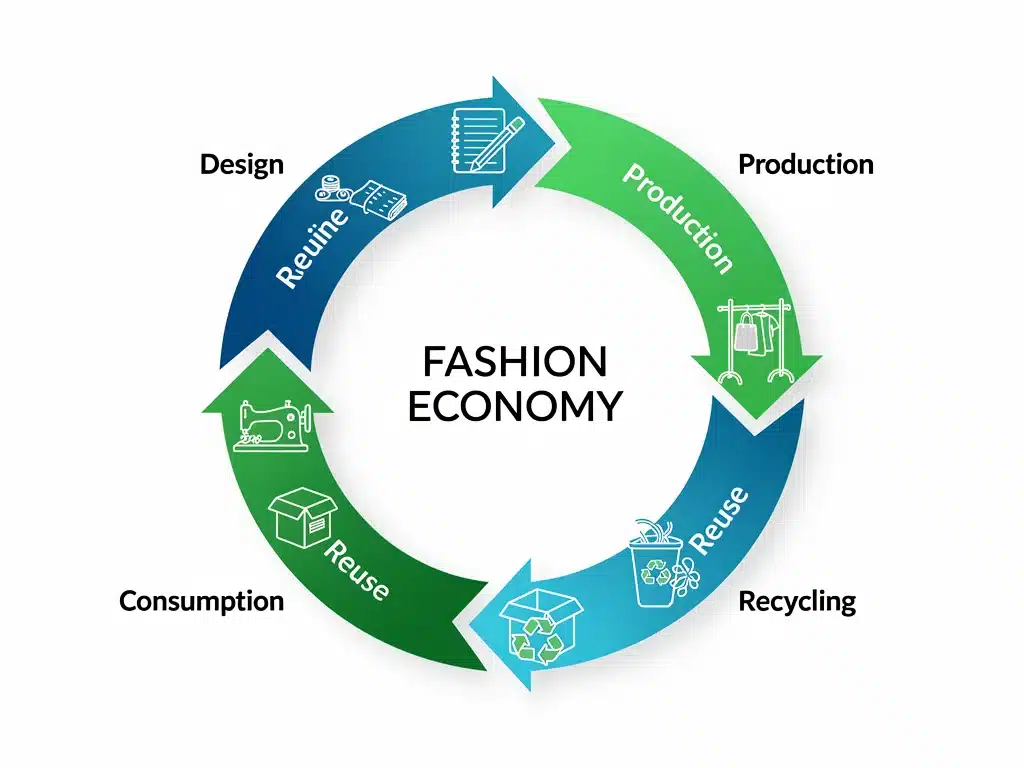
A circular approach aims to extend the useful life of products and reduce unnecessary disposal through repair, reuse, resale, and appropriate recycling.
Several eco-conscious fashion brands in 2026 have established programs that give existing garments additional opportunities for use.
Circular initiatives still have limitations. Textile recycling is technically challenging, and collecting a garment does not guarantee that it becomes new clothing.
From Waste to Resource: Closing the Loop
Repair services can help owners continue wearing clothing that would otherwise be discarded because of minor damage.
Resale and take-back programs may extend garment life or direct textiles toward different recovery methods, depending on their condition and available infrastructure.
For eco-conscious fashion brands in 2026, transparency about what happens after collection is more useful than an unsupported promise of zero waste.
- Repair: Restore clothing where technically and financially practical.
- Resale: Keep wearable garments in circulation.
- Take-Back Programs: Collect eligible used clothing for further assessment.
- Upcycling: Transform materials into different useful products.
- Recycling: Recover textile material when appropriate processes are available.
Why Buying Less Can Be an Effective Strategy
Even products designed with environmental improvements require raw materials, manufacturing, transportation, and other resources.
Choosing an item from one of the eco-conscious fashion brands in 2026 does not automatically eliminate the environmental impact of purchasing it.
Keeping existing clothes in use, choosing versatile pieces, and avoiding unnecessary replacements can support a more thoughtful approach to consumption.
These habits connect fashion choices with the broader principles of a circular economy.
They also complement everyday practices associated with a more sustainable lifestyle, such as maintaining products and reducing avoidable waste.
The objective is not to create a perfect wardrobe overnight, but to make decisions that fit personal needs while considering their wider impact.
Spotlight: The Top 8 Eco-Conscious Fashion Brands in 2026
The following eight brands represent different approaches to more responsible fashion, ranging from garment repair and resale to material innovation and restoration programs.
They were selected because they have identifiable initiatives relevant to American consumers, not because they have been proven to be the eight most sustainable companies.
This editorial selection of eco-conscious fashion brands in 2026 includes apparel and footwear businesses, with different strengths, limitations, and product categories.
1. Patagonia — Repair and Long-Term Clothing Use
Patagonia is an outdoor clothing company associated with repair services, durable product design, and efforts to extend garment life.
Its Worn Wear program offers used Patagonia clothing and gear, alongside information about repair and trade-in options for eligible products.
Among eco-conscious fashion brands in 2026, Patagonia provides a concrete example of encouraging customers to keep functional products in circulation.
What Makes Patagonia Worth Watching?
The Worn Wear approach focuses on extending the usefulness of existing garments instead of treating every wardrobe need as a reason to purchase something new.
Customers can explore selected secondhand items and repair services, subject to the company’s current policies and product eligibility.
Patagonia still produces new products with environmental impacts. Its programs should be viewed as efforts to address those impacts, not proof that its operations are impact-free.
2. Eileen Fisher — Circular Design and Garment Reuse
Eileen Fisher is known for understated clothing and its Renew program, which collects eligible garments from the brand for reuse.
The company’s take-back initiative began in 2009 under the GREEN EILEEN name and later developed into the Renew program.
It stands out among eco-conscious fashion brands in 2026 for linking its original clothing collections to a structured secondhand and reuse initiative.
What Makes Eileen Fisher Worth Watching?
Renew gives qualifying Eileen Fisher garments an opportunity to remain in circulation beyond their first owner.
The program illustrates how a business can take responsibility for products after their initial purchase, although accepted items and services have specific conditions.
Consumers interested in timeless clothing may find the combination of simple design and resale particularly relevant to longer-term wardrobe planning.
3. Reformation — Fashion Design and Sustainability Reporting
Reformation combines contemporary women’s fashion with publicly available sustainability information covering its operations and stated objectives.
The company publishes sustainability updates and reports that allow readers to review its disclosed progress and environmental initiatives over time.
Among eco-conscious fashion brands in 2026, its reporting approach offers a reference point for examining how fashion companies communicate environmental performance.
What Makes Reformation Worth Watching?
Reformation’s public reports provide material for evaluating its stated goals, historical initiatives, and progress rather than relying only on advertising language.
Readers should review the year, scope, measurement methods, and limitations associated with individual claims in the reports.
A company’s willingness to publish information is valuable, but the data still requires interpretation and does not automatically establish industry leadership.
4. Pact — Organic Cotton Everyday Essentials
Pact focuses on everyday clothing and basics, with an emphasis on organic materials and selected supply chain certifications.
Its clothing category includes items such as underwear, T-shirts, and other wardrobe essentials intended for regular use.
For shoppers researching eco-conscious fashion brands in 2026, Pact provides an accessible example of a business centered on frequently purchased basics.
What Makes Pact Worth Watching?
The independent fashion rating platform Good On You assessed Pact in August 2026 and rated the company “Good” overall.
That review highlighted preferred materials and certification coverage across much of its supply chain, while also identifying uncertainty around living wages.
Consumers should examine product-level certification information and avoid assuming that a favorable brand rating guarantees every item has identical attributes.
5. Outerknown — Responsible Materials and Clothing Longevity
Outerknown is a casualwear brand that discusses responsible fiber sourcing, manufacturing practices, and durability within its sustainability commitments.
The company reports initiatives involving organic cotton, supplier standards, and garments designed for long-term use.
It is among the eco-conscious fashion brands in 2026 worth examining for its combination of everyday style and product-life extension initiatives.
What Makes Outerknown Worth Watching?
Outerknown has described its Outerworn resale platform and commitments related to selected denim products and responsible material sourcing.
These activities demonstrate an interest in keeping garments useful after their original sale while incorporating sustainability considerations into product development.
Shoppers should verify the current availability of any guarantee or resale service and read the conditions before making a purchasing decision.
6. Girlfriend Collective — Recycled Activewear and Take-Back Programs
Girlfriend Collective specializes in activewear and uses recycled materials across key collections, including performance fabrics for leggings and other garments.
The company also operates ReGirlfriend, a program developed with SuperCircle to collect eligible used clothing for reuse or recovery.
Among eco-conscious fashion brands in 2026, it illustrates how recycled-material products can be combined with an additional collection initiative.
What Makes Girlfriend Collective Worth Watching?
ReGirlfriend accepts eligible used clothing from Girlfriend Collective and other brands under the program’s stated conditions.
Collected garments may be directed toward resale, upcycling, or other recycling applications according to their material and condition.
The program does not mean every collected item becomes new clothing. Recycled synthetic fabrics also raise questions about fiber shedding and end-of-life processing.
7. Allbirds — Footwear Materials and Carbon Measurement
Allbirds is primarily known for footwear using materials such as wool, tree-derived fibers, and sugarcane-based components.
The company has published information about product carbon footprint assessment and material choices, offering a different perspective on footwear design.
Although footwear differs from apparel, Allbirds belongs in this selection of eco-conscious fashion brands in 2026 because shoes are an important part of everyday personal style.
What Makes Allbirds Worth Watching?
Allbirds has used product-level carbon footprint methodology to examine impacts associated with materials, manufacturing, and other stages of the product lifecycle.
Carbon measurements can help identify emissions-related tradeoffs, but they do not describe every environmental factor, including biodiversity, water use, or labor conditions.
Consumers should compare current product information and avoid assuming that the use of natural materials automatically guarantees a lower overall footprint.
8. tentree — Apparel Connected to Restoration Initiatives
tentree is a Canadian apparel brand active in the North American market, recognized for connecting clothing sales with tree planting and restoration projects.
The company states that it supports the planting of ten trees for each item sold and publishes information about its broader environmental commitments.
Its inclusion among eco-conscious fashion brands in 2026 reflects its relevance to American consumers, not a claim that it is headquartered in the United States.
What Makes tentree Worth Watching?
tentree provides information about its restoration initiatives, including an impact reporting system and tools for tracking associated tree-planting activities.
This business model connects consumer purchases with an additional environmental initiative beyond the garment itself.
However, planting trees does not automatically cancel the environmental footprint of clothing production. Long-term ecological results depend on factors such as survival, location, and project management.
Comparing the Eight Eco-Conscious Fashion Brands
The eight brands differ in product categories, environmental priorities, and consumer appeal. No single company represents every aspect of responsible fashion.
Comparing eco-conscious fashion brands in 2026 is easier when shoppers identify the specific initiative that matters most to them.
Someone seeking outdoor repair services may prioritize different features from a customer interested in recycled activewear or secondhand designer clothing.
Which Brand Matches Different Wardrobe Needs?
Patagonia focuses strongly on outdoor clothing and product longevity, while Eileen Fisher offers minimalist fashion and a structured reuse program.
Reformation emphasizes contemporary women’s fashion, Pact focuses on everyday essentials, and Outerknown offers casual clothing with responsible sourcing initiatives.
Girlfriend Collective serves the activewear market, Allbirds specializes in footwear, and tentree combines apparel with restoration-related commitments.
- Outdoor Clothing: Patagonia.
- Minimalist and Secondhand Fashion: Eileen Fisher.
- Contemporary Women’s Fashion: Reformation.
- Everyday Basics: Pact.
- Casualwear and Denim: Outerknown.
- Activewear: Girlfriend Collective.
- Footwear: Allbirds.
- Restoration-Linked Apparel: tentree.
Challenges and Opportunities for Sustainable Growth
Environmental improvements in fashion face challenges involving production costs, material availability, infrastructure, and verification of company claims.
Eco-conscious fashion brands in 2026 must also address the tension between growing sales and reducing the environmental impact associated with producing more goods.
Meaningful progress depends on measurable results, including durable product design, improved manufacturing practices, and credible reporting.
Scaling Innovation and Consumer Education
Alternative materials can be difficult to manufacture at commercial scale while maintaining consistency, affordability, and reliable environmental performance.
Brands may need to invest in supplier partnerships and testing before new textiles become practical for larger clothing collections.
Consumers evaluating eco-conscious fashion brands in 2026 can benefit from understanding that innovative materials are not automatically superior under every environmental measure.
Digital traceability systems may help record selected supply chain events, although the reliability of those records depends on the accuracy of the original information.
Resale and repair initiatives can also provide opportunities to extend garment lifespans without depending exclusively on improvements in new manufacturing.
Long-term success requires transparent measurement, responsible operations, and products that customers are likely to use for extended periods.
Recognizing Greenwashing in Fashion Marketing
Greenwashing occurs when environmental messaging creates an impression of responsibility that is not adequately supported by evidence.
Claims about carbon neutrality, recycled content, biodegradable materials, or ethical production should be evaluated according to their precise definitions and supporting documentation.
When comparing eco-conscious fashion brands in 2026, readers should favor specific and verifiable disclosures over vague statements about protecting the planet.
| Key Aspect | Description |
|---|---|
| Material Innovation | Organic, recycled, and alternative fibers offer different opportunities for reducing selected production impacts. |
| Ethical Production | Worker protections, supplier oversight, and credible reporting help evaluate labor commitments. |
| Circularity | Repair, resale, reuse, and responsible recovery can help extend garment life. |
| Consumer Trust | Specific disclosures and independently verifiable claims support more informed decisions. |
Frequently Asked Questions About Eco-Conscious Fashion
An eco-conscious fashion brand takes identifiable steps to address environmental impacts in areas such as material sourcing, manufacturing, product longevity, and waste management. Ethical labor practices and transparency are also important considerations. No single initiative guarantees that a brand is sustainable in every aspect.
Interest in sustainable fashion reflects concerns about textile waste, resource use, labor conditions, and unnecessary consumption. Some shoppers increasingly consider these issues when choosing clothing, although price, quality, fit, and convenience remain important purchasing factors.
Brands may publish supplier information, adopt worker protection policies, participate in certification programs, and conduct monitoring or external assessments. The effectiveness of these measures varies, so consumers should examine their scope and any reported shortcomings rather than assuming every factory meets identical standards.
Material innovation can help reduce selected environmental impacts through recycled fibers, improved processing methods, and alternative raw materials. However, the full impact depends on sourcing, manufacturing, product lifespan, and disposal. A new material is not automatically better under every sustainability measure.
Circular fashion aims to keep garments and materials useful for longer through durable design, care, repair, resale, reuse, and appropriate recycling. Programs may collect old clothing, but recycling outcomes vary. Consumers can support circular habits by wearing existing items longer and following practical advice from a zero-waste living guide.
Looking Ahead
The eight eco-conscious fashion brands in 2026 demonstrate different approaches to addressing the fashion industry’s environmental and social challenges.
Patagonia, Eileen Fisher, Reformation, Pact, Outerknown, Girlfriend Collective, Allbirds, and tentree each provide examples of initiatives that consumers can investigate more closely.
Rather than treating any brand as perfectly sustainable, the best approach is to assess evidence, choose clothing that meets genuine needs, and extend the useful life of garments already owned.