Reimagining Work-Life Balance: 4 Innovative Approaches in US by 2026

Reimagining work-life balance is reshaping how American companies organize schedules, employee well-being, career development, and workplace flexibility.
By 2026, the source highlights four approaches gaining attention: the four-day work week, flexible and asynchronous models, wellness-integrated workplaces, and skills-based hiring.
These strategies aim to create a work environment where professional performance and personal well-being can reinforce each other rather than compete.
The Rise of the Four-Day Work Week
The four-day work week is presented as a model designed to reduce working days while maintaining or improving productivity.
Companies adopting this structure may give employees more time for rest, personal responsibilities, and activities outside work.
The source connects this model with higher morale, lower burnout, and a broader movement toward reimagining work-life balance.
Increased Productivity and Engagement
Some organizations report that employees become more focused when they have fewer days available to complete their work.
The prospect of a longer weekend can encourage stronger prioritization, more efficient time management, and greater attention to outcomes.
This structure can also strengthen job satisfaction when employees feel that their personal time is being respected.
Addressing Implementation Challenges
A four-day work week requires companies to reconsider workflows, staffing levels, and customer-service expectations.
- Redefining core business hours to accommodate compressed schedules.
- Ensuring adequate staffing levels to maintain service continuity.
- Developing clear communication guidelines for internal teams and external clients.
- Measuring productivity based on outcomes rather than just hours worked.
Organizations may need to restructure meetings, responsibilities, and communication so shorter schedules do not create operational gaps.
Measuring results instead of time spent at work is presented as an important part of making the model sustainable.
Flexible and Asynchronous Work Models
Flexible and asynchronous work models give employees greater control over when and where they complete their responsibilities.
Asynchronous structures reduce the need for everyone to work simultaneously, which can be particularly useful for distributed teams.
The focus shifts from constant availability toward results, reinforcing autonomy as part of reimagining work-life balance.
Empowering Employee Autonomy
Greater control over schedules can help employees organize professional tasks around family responsibilities and personal commitments.
The source associates this autonomy with lower stress, stronger ownership, and greater satisfaction with day-to-day work.
Flexible schedules can also support a more inclusive workforce by accommodating different lifestyles and individual circumstances.
Leveraging Technology for Seamless Collaboration
Flexible work depends heavily on reliable digital tools that allow teams to share information and coordinate tasks across different schedules.
- Utilizing project management software for transparent task tracking.
- Implementing asynchronous communication tools to reduce reliance on immediate responses.
- Providing access to cloud-based documents and resources for anytime, anywhere access.
- Training employees on best practices for effective remote and flexible collaboration.
Project-management platforms, cloud documents, and asynchronous communication systems help maintain visibility and continuity.
Training employees to use these tools effectively is also important for preventing flexible work from creating communication gaps.

Wellness-Integrated Workplaces
Wellness-integrated workplaces place mental, physical, and emotional well-being directly within the employee experience.
The source describes companies expanding beyond traditional benefits toward programs that support health during the working day.
This approach treats employee well-being as part of organizational performance and a central element of reimagining work-life balance.
Prioritizing Mental Health Support
Mental health support is becoming a more visible component of workplace wellness programs.
Employers may offer therapy access, mental health days, stress-management resources, and employee assistance programs.
Leadership training can also help managers recognize burnout and create an environment where employees feel safer discussing psychological well-being.
Promoting Physical Health and Activity
Physical wellness programs are expanding beyond traditional gym memberships toward broader everyday support.
The source mentions ergonomic assessments, virtual fitness classes, movement challenges, healthy food options, and opportunities for rest.
These initiatives are intended to support energy levels, reduce absenteeism, and contribute to a healthier workforce.
Skills-Based Hiring and Internal Mobility
Skills-based hiring focuses on a person’s capabilities and potential rather than relying only on traditional credentials or linear career histories.
This approach can help companies place employees in roles better aligned with their strengths, interests, and changing circumstances.
Internal mobility complements this model by allowing career development within the same organization, supporting long-term reimagining work-life balance.
Fostering Career Development and Adaptability
Skills-based hiring can make it easier for employees to change roles or pursue opportunities that may not match a conventional career path.
This flexibility can increase adaptability in a labor market where job requirements and technologies continue to evolve.
Internal mobility also gives employees access to new experiences without necessarily leaving an organization they already know.
Reducing Burnout and Enhancing Retention
Employees may experience less burnout when their roles make better use of their strengths and provide meaningful opportunities for development.
A visible path for growth can increase engagement and reduce the feeling of professional stagnation.
The source connects these opportunities with stronger retention because employees are more likely to stay when they feel valued and able to progress.
Technology’s Role in Balancing Act
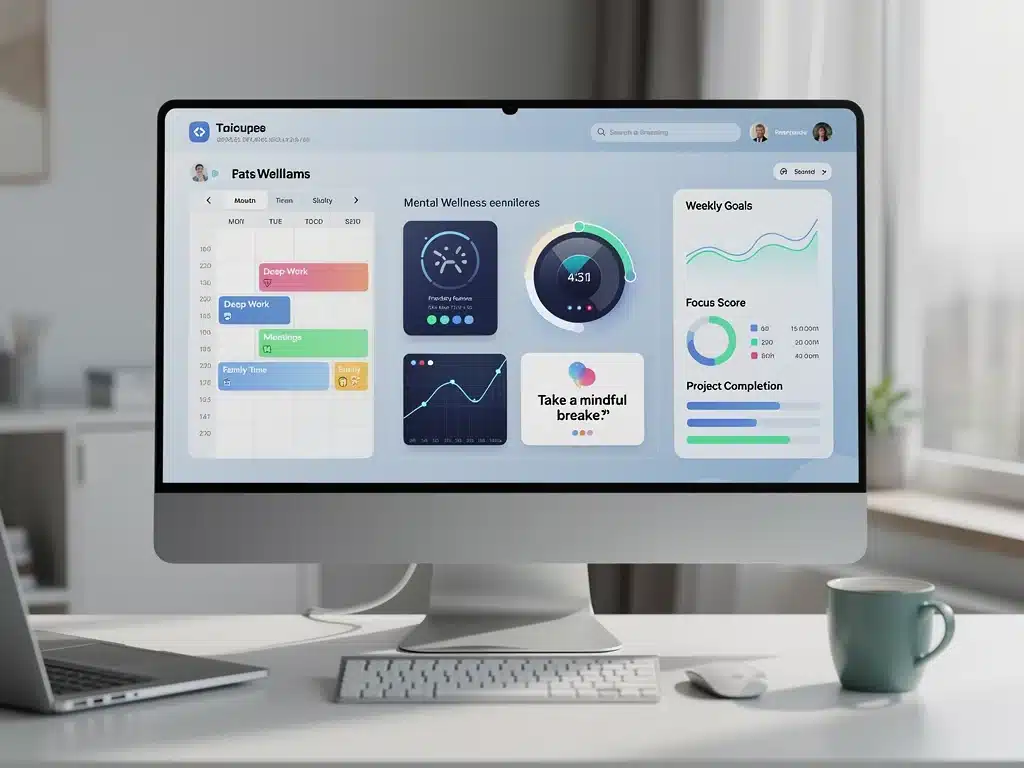
Technology supports many of the workplace models associated with reimagining work-life balance.
Digital tools can facilitate distributed communication, automate routine tasks, track projects, and provide information about productivity and well-being.
The continued development of these platforms makes more personalized and flexible work arrangements easier to manage at scale.
Streamlining Communication and Collaboration
Communication platforms help distributed teams share updates, collaborate on documents, and maintain visibility across different schedules.
Asynchronous messaging can reduce pressure for immediate responses while video calls provide direct interaction when real-time communication is necessary.
Virtual check-ins and online social activities can also help remote employees maintain stronger connections with their teams.
Personalized Wellness and Productivity Tools
Technology can also support individual productivity and well-being through tools designed around scheduling, mindfulness, learning, and personal organization.
- Utilizing AI-driven tools for personalized work schedule recommendations.
- Integrating wearable technology to monitor stress levels and promote breaks.
- Implementing digital platforms for anonymous mental health support and counseling.
- Offering access to online learning modules for skill development and personal growth.
The source highlights AI-based scheduling, wearable devices, digital mental health services, and online learning as examples.
These tools can help employees manage tasks and personal needs more deliberately while supporting broader workplace flexibility.
The Economic Impact of Reimagined Balance
The adoption of new approaches to reimagining work-life balance can also have financial implications for organizations.
The source links hybrid work, lower employee turnover, and higher productivity with potential reductions in operating costs.
Lower burnout and fewer stress-related absences may also reduce healthcare costs and strengthen long-term organizational sustainability.
Attracting and Retaining Top Talent
Flexible policies and stronger well-being programs can become important differentiators in competitive labor markets.
Candidates may consider schedule flexibility, workplace culture, and personal well-being alongside traditional salary and benefit packages.
Companies offering these conditions may therefore strengthen both recruitment and retention.
Boosting Innovation and Creativity
Employees who have adequate rest and personal time may return to work with greater energy and new perspectives.
The source associates lower stress with stronger creativity, problem-solving, and willingness to explore new ideas.
A healthier balance between professional and personal life can therefore support innovation as well as individual well-being.
Future Outlook: Policy and Cultural Shifts
Continued adoption of these workplace models may contribute to changes in both regulation and broader cultural expectations around employment.
The source mentions discussions involving childcare support, digital nomad policies, flexible work rules, and other structural changes.
At the same time, workplace culture is gradually shifting from measuring presence toward evaluating outcomes and impact.
Government and Legislative Support
Some states and municipalities are described as exploring policies designed to support more flexible approaches to work.
- Proposals for tax incentives for companies adopting innovative work models.
- Discussions around standardized guidelines for remote and hybrid work.
- Increased funding for programs supporting employee well-being and mental health.
- Consideration of policies to protect workers’ “right to disconnect” outside of working hours.
Potential measures include incentives, remote-work guidelines, funding for employee well-being, and protections outside scheduled working hours.
These discussions suggest that reimagining work-life balance could increasingly become a policy issue as well as an organizational one.
Evolving Societal Norms and Expectations
Younger generations entering the workforce are presented as important drivers of changing expectations around flexibility and personal well-being.
Companies may face greater pressure to adapt as employees place more value on sustainable schedules and supportive workplace cultures.
The broader emphasis on personal fulfillment and well-being suggests that these expectations may remain influential over the long term.
| Key Approach | Brief Description |
|---|---|
| Four-Day Work Week | Compressed work schedule for enhanced well-being and productivity. |
| Flexible Work Models | Asynchronous work and tailored schedules for greater employee autonomy. |
| Wellness-Integrated | Holistic support for mental, physical, and emotional employee health. |
| Skills-Based Hiring | Prioritizing capabilities and internal mobility for career growth and retention. |
Frequently Asked Questions About Work-Life Balance Innovation
The source identifies growing recognition of the relationship between employee well-being, productivity, and retention, with the pandemic accelerating the shift toward flexible and employee-centered practices.
The source associates the model with improved morale, lower burnout, stronger productivity, and greater appeal to employees seeking more personal time.
Technology supports communication, project management, cloud collaboration, scheduling, and digital well-being resources in flexible and distributed workplaces.
Skills-based hiring can align employees with roles that better match their abilities and interests while internal mobility creates more flexible paths for long-term career development.
The source suggests these approaches may become more established as organizations recognize their potential benefits and workplace expectations continue to change.
What this means
The transformation of American workplaces reflects a broader effort toward reimagining work-life balance beyond traditional scheduling practices.
The four approaches highlighted in the source combine changes in working time, flexibility, wellness, and career development.
Their long-term impact will depend on continued implementation, organizational results, cultural acceptance, and possible changes in employment policy.