Mindful Technology Use: 4 Strategies for Americans to Reduce Screen Time in 2026

Latest developments on Mindful Technology Use: 4 Strategies for Americans to Reduce Screen Time in 2026, with key facts, verified sources and what readers need to monitor next in Estados Unidos, presented clearly in Inglês (Estados Unidos) (en-US).
Mindful Technology Use: 4 Strategies for Americans to Reduce Screen Time in 2026 is shaping today’s agenda with new details released by officials and industry sources. This update prioritizes what changed, why it matters and what to watch next, in a straightforward news format.
The Growing Imperative for Digital Well-being in 2026
As 2026 unfolds, the conversation around digital well-being intensifies, highlighting the critical need for Americans to re-evaluate their relationship with technology. The pervasive nature of screens, from smartphones to smart home devices, has blurred the lines between essential tools and constant distractions, impacting mental health and productivity.
Recent studies indicate a persistent rise in average daily screen time, prompting experts and public health officials to advocate for more deliberate engagement. This shift towards mindful technology use is not about outright rejection but rather about intentional interaction, ensuring technology serves us rather than controls us.
The push for Mindful Technology Use: 4 Strategies for Americans to Reduce Screen Time in 2026 reflects a broader societal recognition that digital habits require proactive management. Without conscious effort, the benefits of technological advancement risk being overshadowed by detrimental effects on individual well-being and social connections.
Understanding the Current Landscape of Screen Time in America
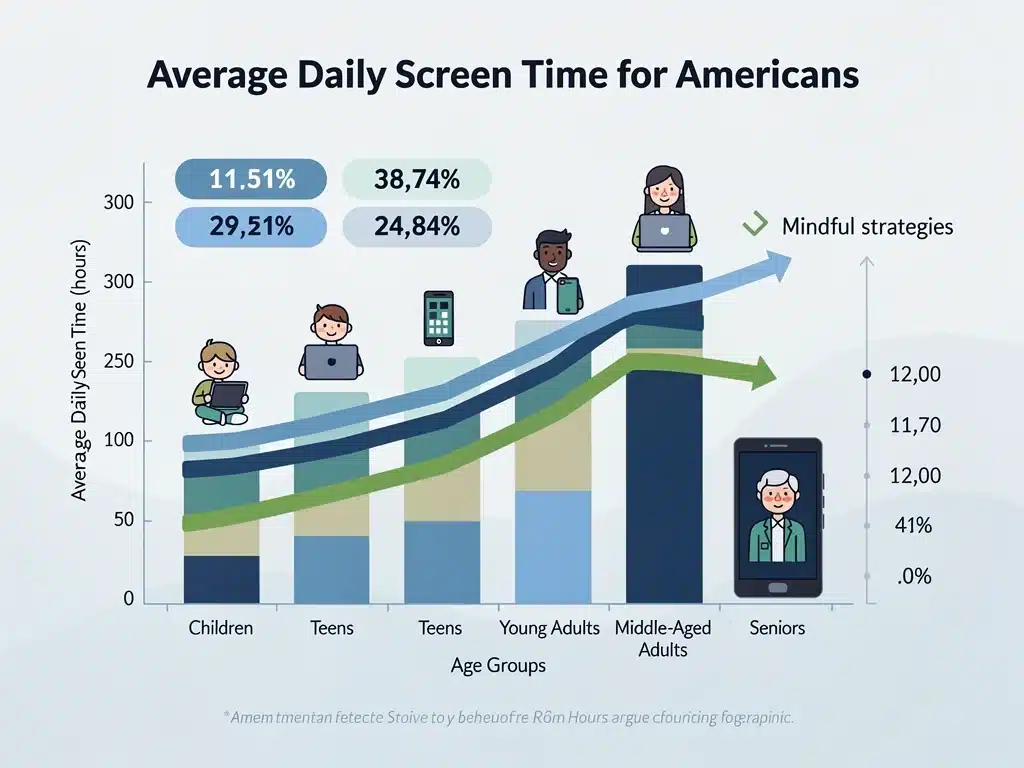
The average American currently spends a significant portion of their day interacting with digital screens, a trend that has accelerated over the past few years. This extensive exposure is linked to various concerns, including sleep disturbances, reduced attention spans, and increased feelings of anxiety and isolation.
Data from various research institutions underscores the urgency of addressing this issue, particularly among younger demographics. While technology offers undeniable advantages in communication and information access, its unchecked use presents a formidable public health challenge that demands innovative solutions.
Recognizing the patterns of screen engagement is the first step towards fostering mindful technology use. By understanding how and why we interact with our devices, individuals can begin to identify areas for reduction and implement more balanced digital practices in 2026 and beyond.
The Impact on Mental Health and Productivity
Excessive screen time has been consistently correlated with negative mental health outcomes, including higher rates of depression and anxiety among heavy users. The constant influx of information and social comparisons can overwhelm individuals, leading to digital fatigue and emotional burnout.
Furthermore, productivity often suffers when individuals are frequently interrupted by notifications and the allure of digital distractions. The ability to focus deeply on tasks is diminished, leading to decreased efficiency and a sense of being constantly overwhelmed by digital demands.
Cultivating mindful technology use directly addresses these concerns by promoting intentional breaks and focused engagement. Reducing screen time can significantly improve mental clarity, enhance concentration, and contribute to a more balanced and fulfilling daily routine.
Strategy 1: Establishing Digital Boundaries and Device-Free Zones
One of the most effective ways to reduce screen time is by consciously establishing clear digital boundaries within daily routines and physical spaces. This involves making deliberate choices about when and where technology is permitted, creating pockets of respite from constant digital input.
Implementing device-free zones, such as the dining table or bedroom, can significantly enhance personal interactions and improve sleep quality. These designated spaces serve as physical reminders to disengage from screens and reconnect with the immediate environment and those around us.
For Mindful Technology Use: 4 Strategies for Americans to Reduce Screen Time in 2026, setting these boundaries is paramount. It requires discipline and consistent reinforcement, but the long-term benefits for mental clarity and relational health are substantial.
Practical Steps for Implementing Device-Free Zones
- Designate specific times, like mealtimes or the hour before bed, as completely device-free.
- Create physical spaces in your home, such as bedrooms, where screens are not allowed.
- Communicate these boundaries to family members and housemates to ensure collective adherence and support.
By creating these intentional breaks, individuals can regain control over their digital consumption. This strategy helps in reducing the automatic impulse to check devices and fosters a more deliberate approach to engaging with technology.
Strategy 2: Cultivating Intentional App Usage and Notification Management
Another crucial strategy for achieving mindful technology use involves a critical review of app usage and proactive notification management. Many applications are designed to maximize engagement, often leading to excessive and unintentional screen time.
Taking the time to audit installed applications and disable non-essential notifications can drastically reduce digital interruptions. This approach empowers individuals to decide when and how they interact with their devices, rather than being constantly pulled in by alerts.
Effective notification management is a cornerstone of Mindful Technology Use: 4 Strategies for Americans to Reduce Screen Time in 2026. It allows for focused work and leisure, minimizing the constant urge to check devices and fostering a greater sense of presence.
Auditing Your Digital Habits for Greater Control
Begin by analyzing which applications consume the most time and whether their usage genuinely aligns with personal goals or merely serves as a distraction. Many smartphones offer built-in tools to track app usage, providing valuable insights into digital consumption patterns.
Once identified, consider deleting or limiting access to apps that do not contribute positively to your well-being or productivity. For essential apps, explore their settings to customize notifications, opting for fewer, more important alerts rather than constant pings.
This deliberate approach to app usage and notification settings empowers individuals to curate a digital environment that supports their goals for mindful technology use. It transforms the smartphone from a demanding master into a helpful servant.

Strategy 3: Prioritizing Real-World Connections and Hobbies
Shifting focus from digital interactions to real-world connections and engaging hobbies is a powerful strategy for reducing screen time. Actively seeking out opportunities for face-to-face conversations and participating in offline activities enriches life in ways screens cannot.
Engaging in hobbies such as reading physical books, spending time in nature, or pursuing creative arts provides a fulfilling alternative to digital consumption. These activities often foster a deeper sense of satisfaction and contribute positively to mental and emotional health.
For Mindful Technology Use: 4 Strategies for Americans to Reduce Screen Time in 2026, making a conscious effort to prioritize these real-world experiences is vital. It helps to rebalance daily routines and cultivate a more grounded existence away from the digital realm.
Reconnecting with Offline Activities
- Schedule regular meet-ups with friends and family that do not involve screens.
- Explore new hobbies or revisit old ones that require hands-on engagement.
- Spend dedicated time outdoors, whether in a park, garden, or simply taking a walk.
By intentionally seeking out and participating in these activities, individuals can naturally reduce their reliance on screens. This approach not only decreases screen time but also enhances overall life satisfaction and strengthens personal relationships.
Strategy 4: Practicing Digital Detoxes and Scheduled Breaks
Incorporating regular digital detoxes and scheduled breaks from technology is an advanced strategy for achieving sustainable mindful technology use. These periods of complete disconnection allow the mind to reset and recover from digital overload.
Digital detoxes can range from a few hours each day to entire weekends or even longer periods, depending on individual needs and circumstances. The key is to completely step away from all digital devices, allowing for uninterrupted focus on other aspects of life.
As part of Mindful Technology Use: 4 Strategies for Americans to Reduce Screen Time in 2026, planning these breaks proactively ensures that they become a consistent part of one’s routine. This deliberate disconnection helps to build resilience against digital dependency and fosters a healthier relationship with technology.
Implementing Effective Digital Breaks
Start with small, manageable breaks, such as an hour without your phone before bed or during lunch. Gradually extend these periods as you become more comfortable with disconnection, perhaps dedicating an entire afternoon or evening to being screen-free.
During these breaks, engage in activities that do not involve screens, such as reading, meditating, or spending time with loved ones. Inform others of your detox periods to manage expectations and avoid feeling compelled to check messages.
The practice of regular digital detoxes and scheduled breaks is instrumental in reinforcing mindful technology use. It provides a valuable opportunity to reflect, recharge, and re-evaluate one’s digital habits, leading to a more balanced and intentional digital life.


The Role of Workplace Policies in Encouraging Mindful Tech Use
Beyond individual efforts, workplace policies are increasingly recognized as crucial in fostering mindful technology use among American employees. Organizations are beginning to understand that constant connectivity and digital overload can lead to burnout and decreased productivity.
Implementing guidelines for after-hours communication, promoting digital breaks, and encouraging focused work periods can significantly reduce work-related screen time. These policies demonstrate a commitment to employee well-being and can lead to a more engaged and healthier workforce.
The integration of supportive workplace policies is a vital component in the broader societal push for Mindful Technology Use: 4 Strategies for Americans to Reduce Screen Time in 2026. It acknowledges that digital habits are not solely personal but also influenced by professional environments.
Navigating Social Media with Greater Intention
Social media platforms are significant contributors to overall screen time, often leading to passive consumption and comparison culture. Navigating these platforms with greater intention is essential for cultivating mindful technology use.
This involves being selective about the content consumed, unfollowing accounts that do not add value, and setting time limits for social media engagement. The goal is to transform social media from a default pastime into a tool for purposeful connection and information gathering.
Developing intentional social media habits is a key strategy for Mindful Technology Use: 4 Strategies for Americans to Reduce Screen Time in 2026. It empowers individuals to reclaim their attention and use these platforms more constructively.
Tips for Mindful Social Media Engagement
- Curate your feed by unfollowing accounts that trigger negative emotions or excessive scrolling.
- Set daily time limits for social media apps using built-in phone features or third-party tools.
- Engage actively with content that inspires or educates, rather than passively scrolling through feeds.
By adopting these practices, individuals can reduce the addictive pull of social media. This conscious approach helps in fostering a healthier and more productive relationship with digital platforms, aligning with the principles of mindful technology use.
Future Outlook: Sustaining Mindful Technology Habits Beyond 2026
The strategies for Mindful Technology Use: 4 Strategies for Americans to Reduce Screen Time in 2026 are not just short-term fixes but foundational steps towards sustainable digital habits. As technology continues to evolve, the need for intentional engagement will only grow.
Sustaining these habits requires ongoing self-awareness, adaptability, and a willingness to continually re-evaluate one’s relationship with digital tools. Education and public awareness campaigns will play a crucial role in reinforcing these practices across different demographics.
Ultimately, the goal is to integrate technology seamlessly and beneficially into life, rather than allowing it to dominate. The principles of mindful technology use will remain relevant, guiding individuals toward a more balanced and fulfilling digital future.
| Key Strategy | Brief Description |
|---|---|
| Digital Boundaries | Establish device-free zones and times to reduce constant digital input. |
| Intentional App Use | Audit applications and manage notifications to control digital engagement. |
| Real-World Connections | Prioritize face-to-face interactions and offline hobbies over screens. |
| Digital Detoxes | Schedule regular, complete breaks from all digital devices for mental reset. |
Frequently Asked Questions About Mindful Technology Use
Mindful technology use is crucial in 2026 to combat the escalating mental health impacts of excessive screen time, such as increased anxiety and decreased productivity. It promotes a healthier relationship with devices, ensuring technology serves human well-being rather than dominating it.
Digital boundaries, like device-free zones in bedrooms or during meals, create intentional spaces and times away from screens. This strategy helps break habitual checking, improving sleep, fostering better personal connections, and encouraging more present engagement with surroundings.
Auditing app usage and managing notifications are key to mindful tech use by reducing constant digital interruptions. Disabling non-essential alerts and limiting time on distracting apps empowers individuals to control their device interactions, leading to more focused work and leisure.
Prioritizing real-world connections and hobbies significantly reduces screen time and enhances overall well-being. Engaging in face-to-face interactions and offline activities like reading or nature walks fosters deeper satisfaction, strengthens relationships, and provides a fulfilling alternative to digital consumption.
The frequency of digital detoxes depends on individual needs, but regular practice is vital. Starting with short, scheduled breaks daily and gradually extending to weekend-long detoxes helps reset the mind, reduce digital dependency, and reinforces sustainable mindful technology use habits.
Looking Ahead: Sustaining Digital Wellness
The strategies for Mindful Technology Use: 4 Strategies for Americans to Reduce Screen Time in 2026 represent a critical turning point in how society approaches digital engagement. These efforts are not merely about temporary reductions but about fostering sustainable habits that will benefit individuals and communities for years to come. The ongoing conversation will focus on integrating these practices into daily life, adapting to new technologies, and continually prioritizing human well-being over unchecked digital consumption. Future developments will likely include more sophisticated tools for digital wellness and increased public health initiatives promoting balanced tech use.