The 2026 Guide to Zero-Waste Living: 3 Practical Steps for American Households

The latest developments on The 2026 Guide to Zero-Waste Living: 3 Practical Steps for American Households are now available. This guide provides key facts, verified strategies, and actionable insights for American households to transition to sustainable living. Focus on immediate, impactful changes for a greener future.
The 2026 Guide to Zero-Waste Living: 3 Practical Steps for American Households is gaining significant traction, offering a clear roadmap for environmental stewardship. This comprehensive guide, developed in collaboration with leading sustainability experts and community organizations, aims to empower everyday Americans. It outlines crucial adjustments and a defined pathway for reducing household waste effectively.
This initiative responds to growing public interest in sustainable practices and the urgent need for tangible environmental action. The guide focuses on simplifying complex concepts into manageable steps. It provides practical solutions designed to fit seamlessly into diverse American lifestyles, making zero-waste living accessible to everyone.
The objective is to equip families with the knowledge and tools required to make a substantial difference. By focusing on three core pillars, the guide ensures that even incremental changes contribute to a larger, positive impact. This approach emphasizes long-term sustainability over quick fixes, promoting lasting behavioral shifts.
Understanding the Urgency of Zero-Waste Living
The imperative to reduce waste has never been more critical, with landfills across the United States reaching capacity. Current projections indicate a continued increase in household waste generation without significant intervention. This trend exacerbates environmental issues, including greenhouse gas emissions and pollution of natural ecosystems.
Adopting zero-waste principles is a direct response to these environmental pressures, offering a proactive solution. It involves a systemic shift in consumption patterns, moving away from a linear ‘take-make-dispose’ model towards a circular economy. This change benefits not only the environment but also household finances and overall well-being.
The 2026 Guide to Zero-Waste Living provides a timely framework for American households to become part of this vital movement. It acknowledges the challenges but emphasizes the immense benefits of embracing a lifestyle that minimizes ecological footprints. The guide serves as a beacon for a more sustainable future.
The Environmental Impact of Household Waste
Household waste contributes significantly to climate change through methane emissions from landfills. Improper disposal also leads to plastic pollution in oceans and soil degradation, harming biodiversity. The sheer volume of waste generated annually in the U.S. demands immediate and collective action.
- Landfill expansion: Increasing demand for new landfill sites impacts local communities.
- Resource depletion: Continuous consumption of virgin materials strains natural resources.
- Pollution: Waste contaminates air, water, and soil, affecting public health.
The commitment to zero-waste living is a commitment to mitigating these severe environmental consequences. It’s about recognizing the interconnectedness of our daily choices with global ecological health. The guide offers a pathway to contribute positively.
Economic Benefits for American Households
Beyond environmental advantages, zero-waste living offers substantial financial savings for families. Reducing consumption, buying in bulk, and extending product lifespans directly translate to lower expenses. This economic incentive makes sustainable practices even more appealing.
Families adopting the principles outlined in The 2026 Guide to Zero-Waste Living often report significant reductions in their grocery bills and overall spending. Investing in durable, reusable items, while initially seeming costly, proves more economical in the long run. This holistic approach benefits both the planet and the pocketbook.
The guide emphasizes that mindful consumption isn’t just an environmental choice; it’s a smart financial strategy. It encourages a re-evaluation of spending habits, promoting conscious purchasing decisions that avoid unnecessary waste and expense. This dual benefit strengthens its appeal.
Step 1: Reduce and Refuse – Minimizing Consumption
The foundational principle of The 2026 Guide to Zero-Waste Living: 3 Practical Steps for American Households starts with “Reduce and Refuse.” This step encourages a critical evaluation of what enters the home, prioritizing conscious consumption over impulsive buying. It’s about stemming the flow of waste at its source rather than managing it after the fact.
Refusing single-use plastics, excessive packaging, and unnecessary purchases forms the core of this approach. This requires a shift in mindset, moving away from convenience-driven habits towards more deliberate choices. The guide provides actionable strategies to make these refusals practical and effective in daily life.
Reducing overall consumption also involves decluttering and evaluating existing possessions, fostering an appreciation for what is truly needed. This minimalist approach not only reduces waste but also creates a more organized and peaceful living environment. It’s a powerful first step in the zero-waste journey.
Practical Strategies for Refusing Waste
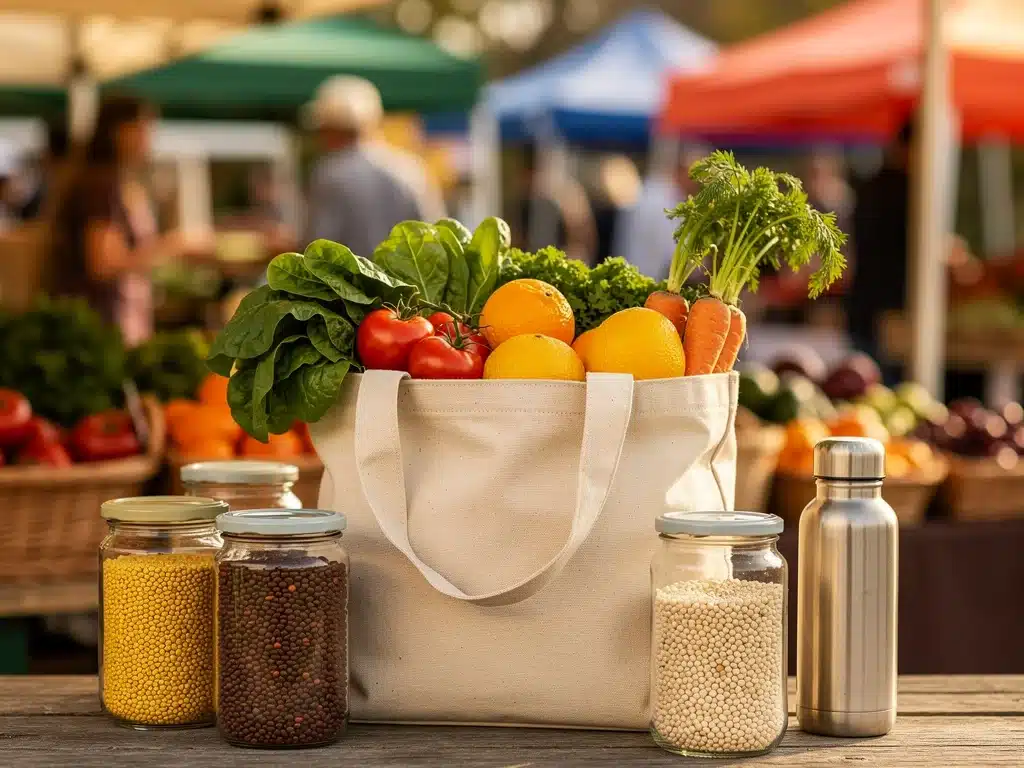
Refusing single-use items is often the most impactful way to start. This includes declining plastic bags, straws, disposable coffee cups, and excessive packaging whenever possible. Carrying reusables becomes a habit, making refusal easier and more consistent.
- Carry a reusable water bottle and coffee cup.
- Bring reusable shopping bags to all stores.
- Say ‘no’ to freebies and promotional items you don’t need.
The guide stresses the importance of communicating your preferences to businesses and service providers. This collective action helps drive demand for more sustainable options across the market. Every refusal sends a message, contributing to a broader cultural shift towards less waste.
Mindful Consumption and Decluttering
Reducing consumption extends beyond refusing new items; it involves a thoughtful assessment of current needs. Before purchasing, consider if an item is truly essential or if an existing alternative suffices. This mindful approach helps prevent accumulation and future waste.
Regular decluttering sessions, guided by the principles of The 2026 Guide to Zero-Waste Living, help identify items that can be donated, repaired, or repurposed. This process not only frees up space but also reduces the likelihood of these items ending up in landfills prematurely. It’s about valuing utility over quantity.
Embracing a minimalist mindset can significantly reduce the amount of waste generated by a household. It encourages a deeper appreciation for quality over quantity, leading to more sustainable purchasing decisions. This step is fundamental to achieving a truly zero-waste lifestyle.
Step 2: Reuse and Repair – Extending Product Lifespans
The second pillar of The 2026 Guide to Zero-Waste Living: 3 Practical Steps for American Households emphasizes “Reuse and Repair.” This step focuses on maximizing the utility of items already in circulation, diverting them from landfills and reducing the demand for new products. It’s about embracing creativity and resourcefulness.
Reusing items involves finding new purposes for old objects or simply using durable alternatives to disposables. Repairing, on the other hand, means fixing broken items instead of discarding them, challenging the prevalent ‘throwaway’ culture. Both practices contribute significantly to a circular economy.
This approach not only saves resources and reduces waste but also fosters a sense of self-sufficiency and skill development within households. The guide offers practical advice on common repairs and creative reuse ideas, making these practices accessible to everyone. It encourages a shift from consumer to conserver.
Creative Reuse Ideas for Everyday Items
Many household items can be given a second life with a little imagination. Glass jars can become food storage containers or decorative vases. Old clothing can be repurposed into cleaning rags or craft materials. The possibilities for creative reuse are vast and often overlooked.
- Transform old T-shirts into reusable shopping bags.
- Use coffee grounds as a natural fertilizer for plants.
- Repurpose plastic containers for organizing small items.
The 2026 Guide to Zero-Waste Living encourages families to explore these options before considering disposal. This mindset shift transforms waste into valuable resources, reducing the overall environmental footprint. It’s a testament to the power of ingenuity in sustainability.
The Importance of Repair Culture
In a society often geared towards replacement, embracing a repair culture is a radical act of sustainability. Learning basic repair skills for clothing, electronics, and household appliances can save money and prevent unnecessary waste. Many communities also offer repair cafes or workshops.

The guide advocates for investing in quality, repairable products and seeking out local repair services when personal expertise is insufficient. This supports local economies and reinforces the value of craftsmanship. It’s a move away from planned obsolescence towards durable, long-lasting goods.
Promoting repair culture is crucial for the long-term success of zero-waste initiatives. It fosters a deeper connection to our possessions and encourages responsible consumption. This step is vital for American households aiming for genuine sustainability.
Step 3: Rot and Recycle – Managing Unavoidable Waste
The final step in The 2026 Guide to Zero-Waste Living: 3 Practical Steps for American Households focuses on “Rot and Recycle.” This acknowledges that despite best efforts, some waste is unavoidable. The goal here is to manage this remaining waste responsibly, ensuring it returns to the earth or is processed for new uses.
Composting, or “rot,” is highlighted as a primary method for organic waste, transforming food scraps and yard waste into nutrient-rich soil. Recycling, on the other hand, deals with materials like plastics, glass, metal, and paper, diverting them from landfills to be reformed into new products.
Both practices require understanding local guidelines and proper sorting, which the guide thoroughly explains. This step ensures that the minimal waste generated by a zero-waste household is handled in the most environmentally sound manner possible. It completes the circular journey of resources.
Composting for American Households
Composting is a powerful tool for reducing household waste, with food scraps and yard waste often making up a significant portion of landfill content. The guide offers various composting methods suitable for different living situations, from backyard bins to indoor worm farms.
- Start a backyard compost pile for garden waste and food scraps.
- Utilize a countertop compost bin for easy collection of kitchen waste.
- Explore community composting programs if home composting isn’t feasible.
The 2026 Guide to Zero-Waste Living emphasizes the benefits of composting, including enriching soil, reducing the need for chemical fertilizers, and lowering methane emissions. It’s a simple yet highly effective practice that American households can easily adopt to make a tangible difference.
Effective Recycling Practices
While reducing and reusing are prioritized, effective recycling is still a crucial component of zero-waste living. Understanding local recycling rules is paramount, as guidelines can vary significantly by municipality. The guide provides resources for finding accurate local information.
Properly sorting and cleaning recyclables prevents contamination, ensuring materials can actually be processed. This includes rinsing containers and separating different types of plastics. The guide addresses common recycling myths and provides clear instructions for maximizing recycling efficiency.
Recycling ensures that valuable materials are kept in circulation, reducing the demand for new raw materials. It’s a collective effort that, when done correctly, significantly supports environmental conservation. This step is essential for American households committed to minimizing their impact.
Navigating Challenges and Overcoming Obstacles
Transitioning to zero-waste living, as outlined in The 2026 Guide to Zero-Waste Living, presents its own set of challenges. These can range from a lack of accessible bulk stores to the initial investment in reusable items. However, understanding these obstacles is the first step toward overcoming them effectively.
Many American households face geographical limitations or budget constraints that can make adopting certain zero-waste practices difficult. The guide acknowledges these realities and offers adaptable solutions. It emphasizes that progress, not perfection, is the key to sustainable change, encouraging small, consistent steps.
Overcoming these hurdles often involves community engagement, advocating for better local infrastructure, and sharing resources and knowledge. The guide promotes a collaborative approach, recognizing that collective action strengthens individual efforts. It’s about finding practical solutions within existing constraints.
Finding Local Zero-Waste Resources
Access to bulk food stores, repair shops, and robust recycling facilities varies across the U.S. The guide provides strategies for identifying and utilizing available local resources. This includes online directories, community groups, and local government initiatives focused on sustainability.
- Search for local bulk food stores and refill stations.
- Connect with community groups focused on zero-waste living for tips and support.
- Check municipal websites for detailed recycling and composting information.
Networking with other zero-waste enthusiasts can also provide valuable insights and support, making the journey less isolating. The 2026 Guide to Zero-Waste Living encourages active participation in local sustainability efforts, fostering a sense of shared responsibility and progress.
Budget-Friendly Zero-Waste Solutions
A common misconception is that zero-waste living is expensive. While some initial investments in reusable items may be required, the guide highlights numerous budget-friendly strategies. These include making items from scratch, repairing instead of replacing, and buying secondhand.
Focusing on reducing overall consumption is inherently cost-effective, as it means buying less in general. The guide also emphasizes the financial benefits of composting and growing some of your own food, further reducing grocery expenses. It demonstrates that sustainability and savings often go hand-in-hand.
The 2026 Guide to Zero-Waste Living proves that a zero-waste lifestyle doesn’t require a large disposable income. It encourages resourcefulness and smart financial planning, making it an accessible goal for all American households regardless of their economic situation. It’s about conscious choices, not costly ones.
The Role of Policy and Community Support
While individual actions are crucial, the success of The 2026 Guide to Zero-Waste Living: 3 Practical Steps for American Households is also deeply intertwined with supportive policies and strong community infrastructure. Government initiatives, local ordinances, and community-led programs play a significant role in facilitating widespread adoption of zero-waste practices.
Advocacy for better waste management systems, extended producer responsibility laws, and incentives for sustainable businesses can accelerate the transition. These systemic changes create an environment where zero-waste choices are not just possible but also convenient and affordable for everyone. It’s about a holistic approach to sustainability.
Engaging with local government and participating in community discussions empowers citizens to shape the future of waste management in their areas. The guide emphasizes that zero-waste living is a collective endeavor, requiring collaboration between individuals, communities, and policymakers. This synergistic approach maximizes impact.
Government Initiatives and Local Ordinances
Many cities and states are implementing policies to reduce waste, such as plastic bag bans, composting mandates, and restrictions on single-use items. These regulations significantly ease the transition for households by making sustainable options the default. The guide points to successful examples across the nation.
- Plastic bag bans in California and New York have reduced plastic waste.
- Composting programs in cities like San Francisco offer curbside collection.
- Extended Producer Responsibility (EPR) laws hold manufacturers accountable for product lifecycle.
The 2026 Guide to Zero-Waste Living highlights the importance of staying informed about local environmental policies and supporting initiatives that promote waste reduction. These governmental actions create a framework that supports and amplifies individual zero-waste efforts, making them more effective.
Building a Zero-Waste Community
Community support networks are invaluable for those embarking on a zero-waste journey. Sharing tips, resources, and encouragement within local groups can make the process less daunting and more enjoyable. Community gardens, repair cafes, and bulk-buying cooperatives are excellent examples of such support.
These community-led initiatives foster a sense of shared purpose and collective responsibility towards environmental goals. They provide practical solutions and emotional support, transforming individual efforts into a powerful movement. The guide encourages active participation in these local networks.
By building strong zero-waste communities, American households can create a ripple effect, inspiring others to adopt sustainable practices. This collective momentum is essential for achieving the ambitious goals set forth in The 2026 Guide to Zero-Waste Living. It’s about growing together towards a greener future.
| Key Step | Brief Description |
|---|---|
| Reduce & Refuse | Minimize consumption and say no to single-use items and excessive packaging. |
| Reuse & Repair | Extend product lifespans through creative reuse and timely repairs. |
| Rot & Recycle | Compost organic waste and responsibly recycle unavoidable materials. |
| Community Support | Engage with local groups and advocate for supportive zero-waste policies. |
Frequently Asked Questions About Zero-Waste Living
Zero-waste living for a household means minimizing the amount of trash sent to landfills, incinerators, or the ocean. It focuses on preventing waste through conscious consumption, reusing items, repairing what’s broken, and composting or recycling what cannot be avoided. It’s a continuous effort towards reducing environmental impact.
Initially, there might be some investment in reusable items like water bottles, bags, or containers. However, in the long run, zero-waste living often leads to significant savings. By reducing consumption, buying in bulk, and repairing instead of replacing, households can lower their expenses on groceries and new products.
American households can start composting in several ways. Options include backyard compost bins for larger spaces, indoor vermicomposting (worm bins) for apartments, or using countertop compost pails for collecting scraps that can then be dropped off at community composting sites or farmer’s markets. Check local municipality guidelines for programs.
Key challenges include limited access to bulk stores, the pervasive nature of single-use packaging, and the initial habit changes required. Overcoming these involves seeking out local resources, advocating for better infrastructure, and a commitment to gradual, consistent changes rather than striving for immediate perfection in zero-waste living.
Beyond reducing landfill waste, zero-waste living significantly lessens resource depletion by extending product lifespans and promoting recycling. It also reduces pollution from manufacturing and transportation, lowers greenhouse gas emissions, and helps protect ecosystems from plastic contamination. It fosters a more sustainable relationship with planetary resources.
Looking Ahead
The 2026 Guide to Zero-Waste Living: 3 Practical Steps for American Households represents a significant step towards a more sustainable future. Its emphasis on practical, actionable steps offers a clear path for individuals and families to contribute meaningfully to environmental protection. As these strategies are adopted, their collective impact will undoubtedly reshape waste management landscapes and consumption patterns across the nation. Continued engagement with local resources and policy developments will be crucial in maximizing the guide’s effectiveness and fostering widespread change.