2026 Travel Outlook: 5 Sustainable Tourism Trends for Americans

The 2026 Travel Outlook highlights five important sustainable tourism trends shaping how American travelers can plan more responsible trips, from lower-impact transportation and accommodations to community-based experiences, ethical wildlife tourism, slow travel, and regenerative approaches.
The 2026 Travel Outlook reflects a broader shift toward travel choices that consider environmental, social, cultural, and economic impacts alongside cost and convenience.
For American travelers, sustainable tourism increasingly means looking beyond marketing claims and examining how accommodations, tour operators, transportation choices, and experiences affect destinations and local communities.
The five trends below offer a practical framework for making more informed travel decisions without assuming that every traveler or destination will prioritize sustainability in exactly the same way.
Trend 1: Eco-Conscious Exploration
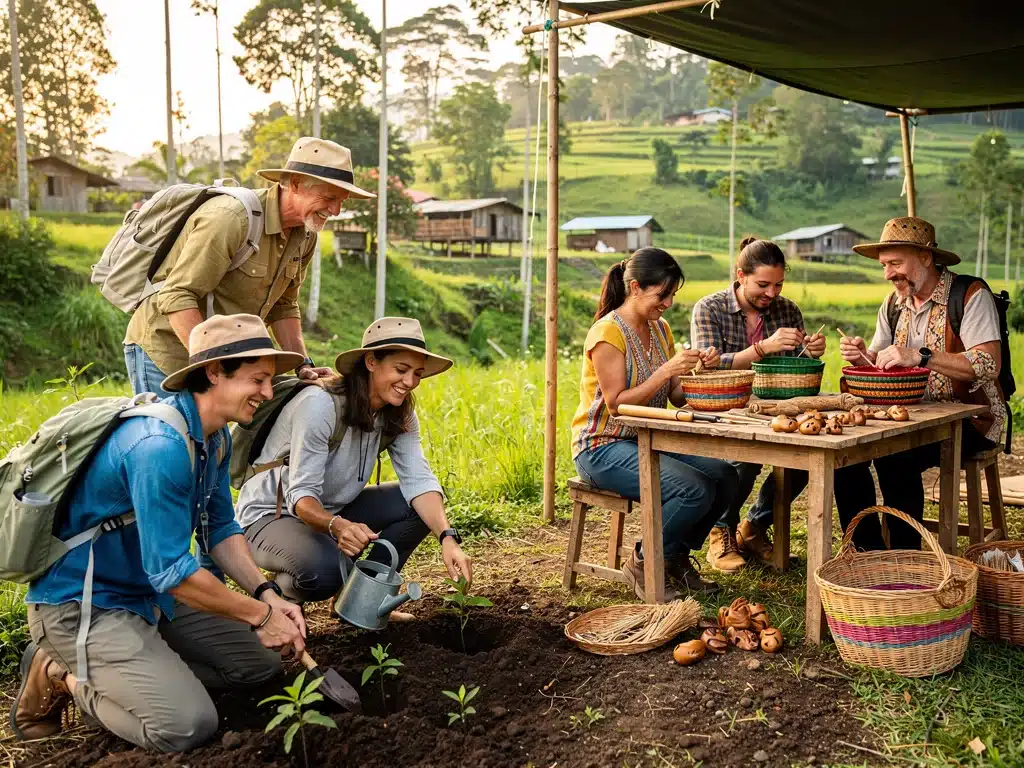
Eco-conscious Travel Outlook focuses on reducing unnecessary environmental impacts while still allowing travelers to experience destinations meaningfully.
This can include choosing accommodations with documented sustainability practices, reducing waste, conserving water and energy, and selecting transportation options that fit the trip with lower environmental impact where practical.
The most credible approach is to look for transparent policies and measurable practices rather than relying solely on broad terms such as “green,” “eco-friendly,” or “sustainable.”
Low-Impact Accommodations and Transportation
Hotels and lodges can reduce environmental impacts through energy efficiency, water conservation, responsible waste management, local sourcing, and protection of surrounding ecosystems.
Travelers can also compare transportation options, such as rail, public transit, walking, cycling, shared transport, or more direct flight itineraries when those choices are practical for the destination.
No single Travel Outlook option is automatically sustainable in every situation, so distance, occupancy, infrastructure, and local conditions should all be considered.
Trend 2: Authentic Cultural Immersion
Many travelers are looking for experiences that go beyond sightseeing and create meaningful opportunities to understand local history, food, language, traditions, and daily life.
Responsible cultural immersion should respect community boundaries and avoid treating traditions, ceremonies, or residents as entertainment created solely for visitors.
The strongest experiences are those in which local people retain meaningful control over how their culture is presented and how tourism revenue is distributed.
Community-Based Tourism Initiatives
Community-based tourism can give residents a greater role in designing, operating, and benefiting from tourism activities.
This may include locally owned accommodations, community guides, workshops, food experiences, cooperatives, and direct purchases from artisans or small businesses.
Travelers should still evaluate each initiative individually because the label “community-based” does not automatically guarantee fair economic distribution or authentic local participation.
Trend 3: Responsible Wildlife and Nature Tourism
Responsible wildlife tourism prioritizes animal welfare, habitat protection, conservation, and observation practices that minimize disturbance.
Travelers are increasingly encouraged to question experiences involving captive animals, direct contact, feeding, performances, or close interactions designed primarily for visitor entertainment.
A responsible operator should be able to explain how its activities protect wildlife, follow local regulations, manage visitor behavior, and contribute to conservation where appropriate.
Ethical Wildlife Encounters
Observing animals in natural habitats from an appropriate distance is generally preferable to experiences that encourage touching, holding, riding, or manipulating wildlife.
Sanctuaries and rehabilitation centers should also be evaluated carefully, because the word “sanctuary” itself does not prove that animal-welfare standards are being followed.
Travelers can look for transparent policies, qualified guides, conservation partnerships, and clear restrictions designed to protect both animals and visitors.
Trend 4: Slow Travel and Longer Stays
Slow Travel Outlook emphasizes spending more time in fewer places instead of moving rapidly between destinations.
This approach can create more opportunities to use local transportation, support neighborhood businesses, and develop a deeper understanding of a destination.
It does not automatically make a trip sustainable, but reducing frequent transfers can sometimes simplify itineraries and lower certain transportation impacts.
Extended Stays and Local Living
Longer stays can allow travelers to experience destinations beyond major attractions and build routines around local markets, restaurants, public transportation, and community spaces.
However, accommodation choices should consider local housing conditions because short-term rentals can create different effects depending on the destination and housing market.
Travelers should therefore balance the appeal of “living like a local” with awareness of neighborhood rules, housing pressures, and community preferences.
Trend 5: Wellness and Regenerative Travel Outlook
The connection between wellness and sustainable tourism is becoming more visible as travelers combine personal well-being with nature, local food, outdoor activity, and slower itineraries.
Regenerative travel goes a step further by asking whether tourism can contribute positively to ecosystems or communities rather than focusing only on reducing harm.
Examples can include habitat restoration, conservation funding, cultural preservation, or community-led projects, provided those initiatives are locally designed and genuinely beneficial.
Contributing to Local Well-being and Ecosystems
Travelers can support local well-being by choosing locally owned businesses, hiring local guides, purchasing regional products, and respecting community rules and cultural practices.
Participation in conservation or volunteer projects requires additional caution because poorly designed programs can create unintended environmental or social harm.
The most credible projects clearly explain who leads the work, what problem is being addressed, how results are measured, and how local communities benefit.
How to Evaluate Sustainable Travel Outlook Claims
Sustainability claims can be difficult to compare because hotels, destinations, and tour operators may use different standards, certifications, and marketing language.
The Global Sustainable Tourism Council provides internationally recognized frameworks covering sustainable management, local socioeconomic benefits, cultural heritage, and environmental impacts.
Travelers can use these areas as a checklist when evaluating whether a tourism business provides meaningful evidence behind its sustainability claims.
Understanding Certifications
A sustainability certification can be useful when it is based on clear standards and supported by a credible verification process.
However, recognition of a standard and accreditation of the organization performing certification are separate issues, so travelers should not treat every logo as equivalent.
When possible, review who created the standard, who performs the audit, how often compliance is checked, and whether results or criteria are publicly available.
Supporting Local Economies More Directly
One of the clearest sustainable tourism principles is increasing the social and economic benefits that remain within host communities.
Locally owned lodging, restaurants, guides, transportation providers, markets, and artisans can help tourism spending circulate more directly within a destination.
Travelers should still consider quality, safety, labor conditions, and local regulations rather than assuming every locally owned business automatically operates sustainably.
Reduce Economic Leakage Where Practical
Economic leakage occurs when a large share of tourism spending leaves the destination instead of supporting local businesses and workers.
Booking directly with local providers can sometimes help retain more revenue locally, although intermediaries may still provide useful consumer protections or logistical advantages.
A balanced approach is to compare options and intentionally direct at least part of the Travel Outlook budget toward locally owned businesses.
Avoiding Overtourism and High-Pressure Destinations
Sustainable Travel Outlook also involves considering how visitor concentration affects housing, infrastructure, ecosystems, cultural sites, and everyday life for residents.
Traveling during shoulder seasons, visiting secondary attractions, or staying longer rather than making brief high-volume visits can sometimes reduce pressure on crowded areas.
These choices should follow local guidance because destinations may use reservations, visitor caps, access fees, or seasonal restrictions to manage demand.
Remote Destinations Require Extra Care
Less-visited destinations are not automatically better alternatives because small communities and sensitive ecosystems can have limited capacity to absorb tourism.
Visitors should research waste disposal, water availability, transportation, protected areas, community rules, and other local constraints before traveling to remote regions.
Responsible exploration means respecting the carrying capacity of a place rather than simply shifting crowds from famous destinations to less prepared ones.
Practical Sustainable Travel Outlook Planning for Americans
Travelers do not need to create a perfectly impact-free trip, because tourism inevitably uses transportation, infrastructure, energy, and other resources.
A more realistic goal is to identify the largest impacts of a particular itinerary and make practical improvements where they are meaningful and affordable.
Transportation, accommodation, length of stay, local spending, wildlife experiences, and waste are useful areas to review before booking.
A Simple Pre-Trip Checklist
Start by researching the destination’s own visitor guidance, environmental restrictions, community expectations, and transportation options.
Then compare lodging and tour providers based on specific practices rather than sustainability slogans, paying attention to recognized standards where available.
Finally, plan how to spend locally, reduce unnecessary waste, respect cultural norms, and minimize disruption to wildlife and natural areas.
What Sustainable Tourism Does Not Mean

Sustainable tourism does not mean eliminating all flights, avoiding popular destinations entirely, or choosing the option with the strongest environmental marketing message.
It also does not guarantee that one tourism activity can simultaneously maximize environmental, economic, social, and cultural benefits without tradeoffs.
The goal is better decision-making based on credible information, local context, and an understanding that sustainability includes more than carbon emissions alone.
Be Careful With Greenwashing
Terms such as “eco,” “green,” “regenerative,” and “carbon neutral” can be meaningful only when the business explains the practices and evidence behind them.
Travelers should be cautious when claims are vague, rely almost entirely on offsets, or focus on one small initiative while ignoring larger environmental or social impacts.
Transparent reporting, credible standards, measurable goals, and independent verification can provide stronger evidence than promotional language alone.
| Key Trend | Practical Meaning |
|---|---|
| Eco-Conscious Exploration | Compare transportation, accommodations, waste, energy, water, and environmental practices. |
| Cultural Immersion | Engage respectfully with locally led cultural experiences and businesses. |
| Responsible Wildlife Tourism | Prioritize animal welfare, habitat protection, and low-disturbance observation. |
| Slow Travel | Spend more time in fewer places and reduce unnecessary transfers where practical. |
| Regenerative Travel | Support credible projects designed to create positive community or environmental outcomes. |
Frequently Asked Questions About Sustainable Travel Outlook
Looking Ahead: The Future of American Exploration
The 2026 Travel Outlook reflects growing attention to the wider consequences of travel rather than a single new tourism model.
Eco-conscious operations, community benefits, wildlife protection, slower itineraries, and regenerative projects can all contribute to more responsible travel when they are supported by credible practices and local participation.
As these sustainable tourism trends continue to evolve, travelers can make better choices by focusing on transparency, measurable impacts, local context, and meaningful benefits for both destinations and visitors.